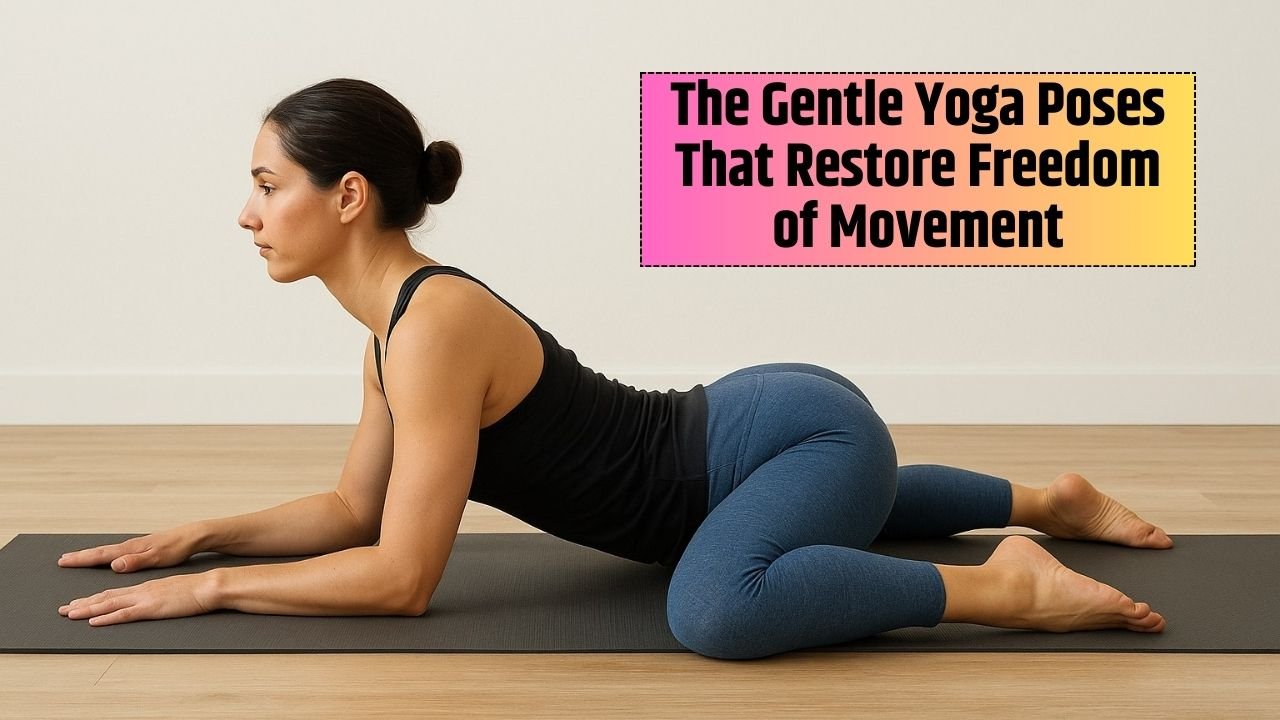

Hip stiffness is one of those sneaky things you don’t notice until it starts messing with your day-to-day life. You bend to tie your shoes, sit cross-legged on the floor, or even roll over in bed—and suddenly there’s that dull, tight pull in your hips. It’s not just uncomfortable; it affects how your entire body moves. Blame it on hours of sitting, stress, or simply not moving enough. The good news? You don’t need fancy equipment or extreme flexibility to fix it. A handful of mindful yoga poses can gently restore mobility, loosen stiffness, and make movement feel fluid again.
Why Hip Stiffness Affects Overall Movement
The hips are like the body’s central hinge—everything above and below depends on how well they function. When the hips tighten, the knees, lower back, and even shoulders start compensating. Walking feels heavier, posture slumps, and daily motion becomes less natural. But when the hips move freely, balance improves, pressure on the spine lessens, and there’s an effortless ease to every step.
How Yoga Loosens Hips Safely
Yoga’s secret weapon isn’t just stretching—it’s the nervous system. Instead of forcing flexibility, yoga teaches the body to relax first. With slow breathing and gentle positioning, muscles around the hips gradually let go of tension. Circulation improves, joints get nourished, and over time, stiffness fades. This is especially powerful for long-term tightness built up from sitting or stress, where patience pays off far more than pushing deeper.
Standing Yoga Poses to Improve Hip Function
Standing poses train your hips to open while building stability. Low Lunges (Anjaneyasana) lengthen tight hip flexors that shorten from too much sitting. Warrior II (Virabhadrasana II) strengthens and opens the inner thighs, while Goddess Pose (Utkata Konasana) challenges the hips to stay wide and engaged. These postures retrain your muscles to support your joints correctly, improving how you walk, stand, and balance.
| Standing Pose | Key Benefit | Duration |
|---|---|---|
| Low Lunge | Opens hip flexors, reduces lower back strain | 30–45 sec each side |
| Warrior II | Builds hip stability and leg strength | 30 sec each side |
| Goddess Pose | Opens inner thighs, improves balance | 30–60 sec |
Seated Poses for Controlled Hip Release
Seated stretches allow you to move slowly and safely into deeper openings. Try Bound Angle Pose (Baddha Konasana)—sit tall, bring the soles of your feet together, and let the knees fall open. Or Seated Forward Fold (Paschimottanasana), which relaxes the hips and hamstrings together. Even gentle Seated Twists help restore natural pelvic rotation, easing tension through the lower spine.
Supine Poses for Deep Relaxation and Mobility
Lying-down hip stretches are perfect for beginners or anyone with joint sensitivity. Figure-Four Stretch (Supta Kapotasana)—lying on your back, cross one ankle over the opposite knee and gently draw both legs toward you. This targets the outer hips and glutes, common spots for tightness. Knees-to-Chest Pose (Apanasana) relieves the lower back and decompresses the hips, while Supine Twist (Supta Matsyendrasana) adds gentle rotation and releases trapped tension along the spine.
Restorative Poses for Long-Held Tension
Restorative yoga works wonders for chronic hip tightness. Use props—pillows, blankets, or yoga blocks—to fully support your body so you can stay in each pose longer. Supported Reclined Butterfly or Wide-Knee Child’s Pose are excellent here. When the body feels safe and supported, the deeper connective tissues around the hips begin to release—something regular stretching alone can’t achieve.
The Role of Breath in Improving Movement
If there’s one thing that separates yoga from regular stretching, it’s the breath. Deep, slow breathing triggers relaxation responses that tell muscles it’s safe to let go. Try exhaling slightly longer than you inhale—say, in for 4 counts, out for 6. Each breath helps your hips soften just a little more. Over time, this breathing–movement connection retrains both your body and your mind to stay calm and supple.
How Long and How Often to Practice
You don’t need marathon sessions. Just 10–20 minutes of hip-focused yoga, most days of the week, can make a noticeable difference within two weeks. Consistency matters more than intensity—those short daily practices keep your joints lubricated and prevent tightness from creeping back.
| Practice Time | Frequency | Expected Benefits |
|---|---|---|
| 10–20 minutes | 4–6 days/week | Improved mobility, less stiffness, better posture |
| 5 minutes | Daily | Maintenance of flexibility and comfort |
Using Props to Support Progress
Cushions under the hips, folded blankets under the knees, or yoga blocks beneath the thighs can turn strain into softness. When your body feels supported, the muscles naturally relax deeper. Props aren’t “cheating”—they’re smart tools to make mobility work safer and more effective.
Common Mistakes to Avoid
The biggest mistake? Forcing it. Forcing stretches, holding your breath, or rushing through poses makes the body tighten even more. True mobility comes from patience. Keep sensations mild and focus on smooth, steady breathing. Over time, what once felt impossible starts to feel natural.
How Improved Hip Movement Feels in Daily Life
Once your hips loosen up, movement everywhere becomes easier. Walking feels smoother, sitting feels lighter, and even your sleep quality can improve. You might notice less tension in your lower back and knees, more confidence when standing, and an overall sense of flow in how your body moves.
Who Benefits Most from Hip-Focused Yoga
This kind of practice is perfect for office workers glued to desks, older adults seeking more comfort, or athletes recovering from tightness. Even beginners who feel “too stiff for yoga” benefit most, because the approach is slow, supportive, and adaptable for every body type.
Releasing hip stiffness isn’t about pushing harder—it’s about softening smarter. Yoga offers a safe, science-backed way to unlock the hips through breath, awareness, and gentle motion. Over time, those mindful movements retrain your body to move freely again. With consistency, you’ll walk taller, feel lighter, and carry yourself with a kind of ease that radiates through everything you do.
FAQs
Yes. Gentle, consistent yoga restores muscle balance and joint mobility over time.
Most people notice improvements within one to two weeks of steady practice.
Absolutely. Gentle daily sessions help maintain flexibility and prevent stiffness from returning.
Not at all yoga meets you where you are. Flexibility develops naturally with relaxed consistency.
No. You should feel mild stretching, never sharp pain. Ease and comfort lead to better results.
