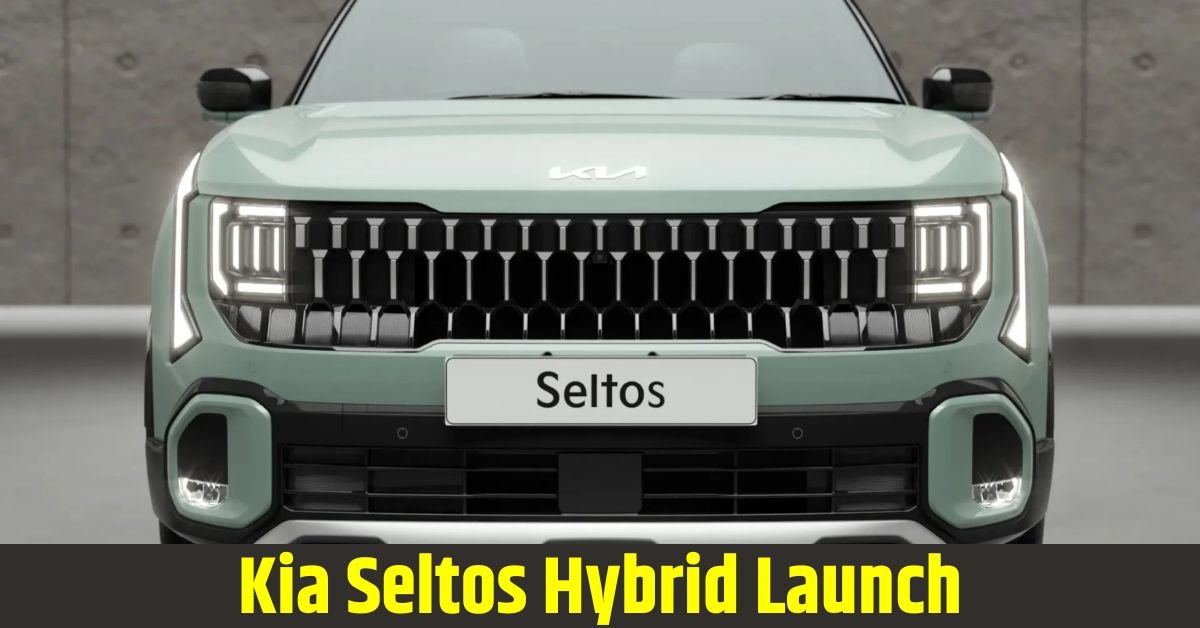

Kia isn’t easing into the future it’s flooring it. With the All-New Kia Seltos set to debut in India as the fully redesigned model’s first global market, the Korean automaker is making it clear where its priorities lie. India isn’t just another launch destination; it’s the testing ground for Kia’s next big leap, including the brand’s first serious push into hybrid technology in the midsize SUV segment.
Sales of the next-generation Seltos kick off in January, but the real long game is electrification. Quietly, deliberately, Kia has already laid the groundwork.
India-First Strategy for the New Seltos
The all-new Seltos has been engineered with future powertrains in mind. From the platform up, Kia ensured compatibility with hybrid systems—something the current model never had. According to a recent Autocar Professional report, the first-ever Kia Seltos Hybrid is now expected to launch in India by June 2027.
That gap isn’t hesitation. It’s strategy.
Hybrid systems bring added complexity electric motors, power electronics, traction batteries—and Kia doesn’t want to rely heavily on imports. Localising core hybrid components is key to keeping prices realistic in a fiercely cost-sensitive market like India. That localisation effort, insiders suggest, is the main reason for the delayed hybrid rollout.
A Stepping Stone Before the Seltos Hybrid
Interestingly, Kia may not wait until 2027 to introduce Indian buyers to its hybrid tech. Atul Sood, Senior Vice President – Sales & Marketing at Kia India, recently hinted that another model could get hybrid technology first.
All signs point to the Sorento Hybrid.

The company has already imported the Sorento Hybrid from South Korea for local testing, and it’s widely expected to arrive around the festive season later this year. If launched, it would serve as Kia’s hybrid halo product—less about volumes, more about visibility and confidence-building.
The Sorento Hybrid packs a more sophisticated setup, based on a 1.6-litre turbocharged petrol engine paired with an electric motor. Output is higher, performance is stronger, and the tech is more advanced than what the Seltos Hybrid will eventually use. In short, it’s the perfect showroom demonstrator for Kia’s electrification ambitions.
Why the Seltos Hybrid Will Be Different
Globally, Kia uses a 1.6-litre naturally aspirated petrol engine for the Seltos Hybrid. The catch? That engine isn’t manufactured in India, and there are no near-term plans to localise it. Importing it would push costs up—and that’s a risk Kia isn’t willing to take in a segment where pricing can make or break a model.
Instead, Kia is expected to take a more pragmatic route.
For the Indian-market Seltos Hybrid, the company will likely adapt its locally produced 1.5-litre naturally aspirated petrol engine. This motor already powers the standard all-new Seltos and is well understood by Kia’s engineers and suppliers.
Here’s how the numbers stack up today:

| Engine | Power | Torque | Application |
|---|---|---|---|
| 1.5L NA Petrol | 114 hp | 144 Nm | All-new Seltos (ICE) |
| 1.5L NA Petrol (Hybrid, expected) | Retuned | Retuned | Seltos Hybrid (India) |
The hybrid version will almost certainly feature a revised state of tune, optimised to work seamlessly with an electric motor and battery pack rather than chasing outright performance.
Fuel Efficiency: The Real Win
This is where things get interesting. The Seltos Hybrid is expected to deliver fuel efficiency close to 25 km/l—an enormous leap in a segment where petrol SUVs often struggle to cross the high teens in real-world conditions.
That translates to a 35–40% improvement over the regular petrol-powered all-new Seltos using the same engine. For buyers juggling rising fuel prices and longer commutes, that kind of gain isn’t a “nice-to-have”—it’s a decisive advantage.
And unlike plug-in hybrids or EVs, there’s no charging anxiety here. The system recharges itself on the move, blending electric and petrol power seamlessly in traffic-heavy urban environments.
Vehicle-to-Load: A Segment-First Feel-Good Feature
Another standout feature expected on the Seltos Hybrid is vehicle-to-load (V2L) bi-directional charging. This allows owners to power external devices—laptops, camping equipment, even small appliances—directly from the vehicle’s traction battery.
It’s not a gimmick. In a country where weekend road trips, outdoor work, and even emergency power needs are becoming more common, V2L adds real-world utility. Hyundai has already tested Indian buyers’ appetite for this tech with its EVs, and Kia seems confident the demand will spill over into hybrids too.

Positioning in a Rapidly Changing Market
By the time the Seltos Hybrid arrives in 2027, India’s midsize SUV segment will look very different. Hybrids from Toyota and Maruti Suzuki are already gaining traction, and rivals are racing to strike the right balance between efficiency and affordability.
Kia’s bet is clear: bring the all-new Seltos first, let it establish design and feature leadership, then layer in hybrid tech once costs can be controlled and customer awareness is higher—possibly thanks to the Sorento Hybrid doing the heavy lifting early on.
It’s a phased approach, but not a passive one.
What This Means for Buyers
For prospective Seltos buyers, the roadmap offers clarity. If you’re looking for the latest design, tech, and petrol or turbo-petrol performance, the all-new Seltos arriving in January ticks those boxes. If fuel efficiency and long-term running costs matter more, the Seltos Hybrid is shaping up to be worth the wait.
Kia isn’t rushing the hybrid badge onto the Seltos just to chase headlines. Instead, it’s taking the slower, more sustainable route localisation, cost control, and ecosystem readiness.
Wrap-Up
The all-new Kia Seltos isn’t just a model change; it’s the foundation for the brand’s next decade in India. With a hybrid version already locked into the product plan and a likely Sorento Hybrid preview on the way, Kia is signalling serious intent.

June 2027 may sound far off, but in automotive timelines, it’s tomorrow. And when the Seltos Hybrid finally arrives, it won’t be playing catch-up—it’ll be stepping into a market Kia has carefully prepared.
FAQs
Sales of the redesigned Kia Seltos are expected to begin in January.
The Seltos Hybrid is likely to go on sale in India by June 2027.
It is expected to use a hybridised version of Kia’s locally produced 1.5-litre naturally aspirated petrol engine.
Fuel economy is expected to be close to 25 km/l, offering a 35–40% improvement over the regular petrol model.
Yes, it is expected to offer V2L bi-directional charging, allowing external devices to be powered via the car.
