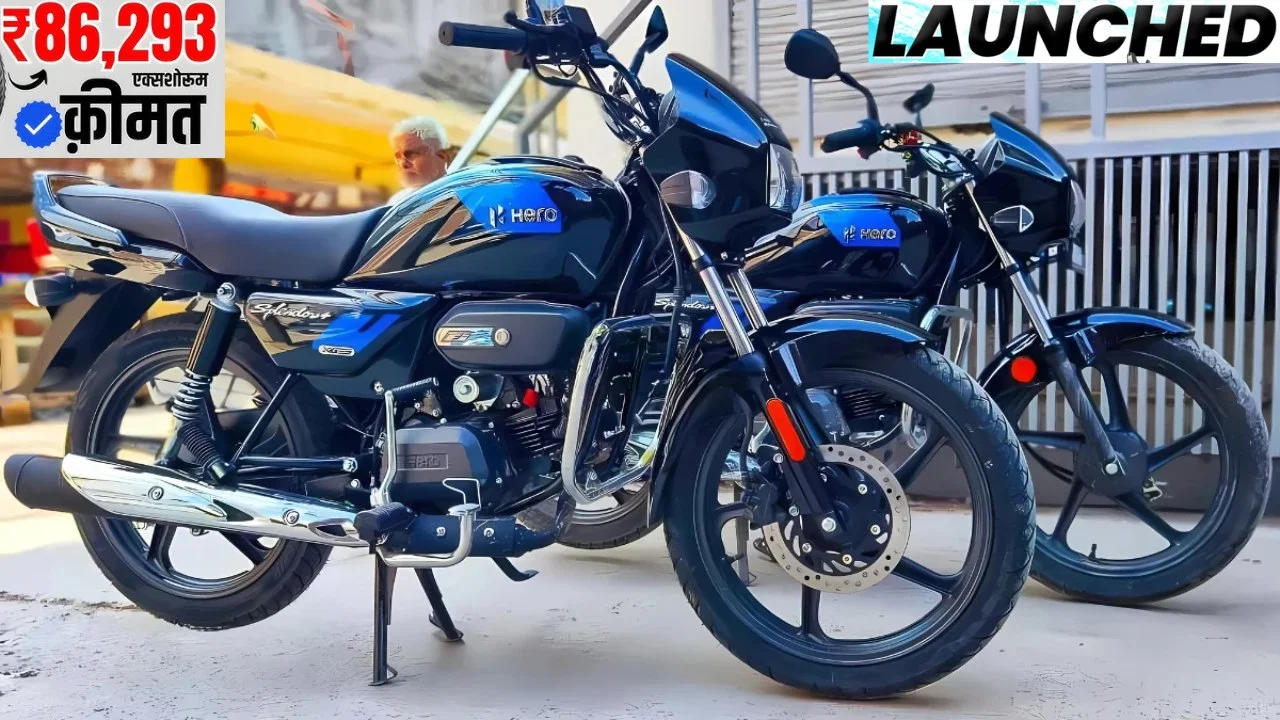

The name Splendor carries serious weight on Indian roads. It’s the bike your neighbor still rides after a decade, the one that taught half the country how to commute cheaply and reliably. Now imagine that same no-nonsense DNA, minus petrol, minus engine noise, and minus rising fuel bills. That’s exactly the space the Hero Splendor Electric 2026 is trying to walk into—and if Hero MotoCorp plays this right, it could quietly reshape India’s electric two-wheeler story.
This isn’t about flashy speeds or racing stripes. It’s about everyday riders who want predictable costs, zero drama, and a machine that simply shows up every morning and does its job.
Built for Real-World Daily Commuting
Hero isn’t chasing thrill-seekers here. The Splendor Electric 2026 is being positioned as a workhorse EV, tuned for city usage and short-to-medium daily runs. The expected 120 km range on a single charge is the headline figure, and for most commuters, that’s more than enough for two or three days of riding before thinking about charging again.
Electric torque does what petrol bikes can’t—instant response from the moment you twist the throttle. That makes stop-and-go traffic easier, smoother, and honestly less tiring. Add a lightweight chassis to the mix, and the scooter-like ease of movement through traffic becomes one of its biggest advantages.
This is the kind of EV meant to blend into daily life, not demand adjustments.
Swappable Battery
If there’s one feature that could define the Splendor Electric 2026, it’s the swappable battery system. Charging anxiety remains the biggest mental block for EV buyers, and Hero seems intent on tackling that head-on.
Instead of waiting hours to recharge, riders can simply swap a drained battery for a fully charged one at designated stations. For apartment dwellers, delivery riders, and people without dedicated parking, this is a massive win. The removable battery also means you can carry it upstairs and charge it at home like a large power bank.
It’s convenience-first thinking, very much in line with how the original Splendor earned trust—by being easy to live with.
Pricing That Targets the Mass Market
Hero knows its audience. An electric Splendor priced out of reach would defeat the entire purpose. That’s why the expected price tag of around ₹99,000 matters so much. It places the bike squarely within reach of middle-class commuters who are already feeling the pinch of fuel costs.

Once EV subsidies and state incentives come into play, the effective on-road price could dip even lower. Over time, the math starts making sense—no petrol bills, fewer service visits, and significantly lower running costs.
For someone riding 30–40 km a day, the savings add up quietly but consistently.
| Estimated Cost Breakdown | Approximate Figures |
|---|---|
| Expected Ex-Showroom Price | ₹99,000 |
| Estimated Running Cost | ₹0.25–0.30 per km |
| Petrol Equivalent Cost | ₹2.5–3 per km |
| Annual Savings (Avg Use) | ₹20,000–₹30,000 |
Familiar Design, Minimal Learning Curve
Hero isn’t reinventing the wheel visually, and that’s intentional. The Splendor Electric 2026 is expected to retain familiar design cues—upright seating, simple body panels, practical ergonomics—while quietly modernizing the look with subtle EV touches.
That familiarity matters. For riders moving from petrol motorcycles to electric for the first time, a radical design can feel intimidating. This one won’t. The seating position stays comfortable, the controls remain intuitive, and the riding posture feels instantly familiar.
It’s less “future machine” and more “same bike, smarter heart.”
Low Maintenance, Lower Stress Ownership
One of the underrated advantages of electric two-wheelers is how little there is to maintain. No engine oil. No clutch plates. No exhaust system. No fuel injectors acting up.
The Splendor Electric 2026 benefits directly from this simplicity. Routine servicing becomes cheaper and less frequent. Brake pads, tyres, and suspension components still matter—but the big-ticket mechanical headaches simply disappear.
Over five to seven years of ownership, this reduction in maintenance alone could save owners tens of thousands of rupees. That’s very much in line with why the petrol Splendor dominated Indian roads for decades.

Smart Features Without Overcomplication
Hero appears to be walking a fine line with technology—and that’s a good thing. Instead of overwhelming users, the Splendor Electric 2026 is expected to focus on useful digital features.
A clear digital display showing battery percentage, remaining range, speed, and trip data is likely. Select variants may include basic smartphone connectivity for navigation or ride data. Nothing fancy. Nothing distracting.
This is tech that supports commuting, not tech that demands attention.
Cleaner, Quieter, City-Friendly Riding
Electric mobility isn’t just about saving money. It’s also about reducing noise and emissions—something Indian cities desperately need. The Splendor Electric 2026 produces zero tailpipe emissions, and the near-silent motor transforms daily commuting into a calmer experience.
Early-morning rides, crowded lanes, residential areas—the difference is noticeable. Over time, widespread adoption of such EVs could significantly reduce urban noise pollution, not just air pollution.
For riders who want to do their bit for the environment without sacrificing reliability, this ticks the right boxes.
Charging That Fits Into Daily Life
Charging anxiety often comes from fear, not experience. Hero seems to be designing this EV around real usage patterns. Overnight home charging covers most needs, while the swappable battery system provides backup flexibility.
You don’t need fast chargers or infrastructure upgrades at home. Plug in. Sleep. Ride. Repeat.

That simplicity could be what finally convinces hesitant buyers to switch.
Perfectly Tuned for City Life
This is not a highway cruiser, and it’s not pretending to be one. The Splendor Electric 2026 is optimized for city speeds, quick acceleration, easy parking, and stress-free maneuvering.
Office commutes. Grocery runs. Short errands. Delivery work. Everything it’s built for reflects how most Indians actually use two-wheelers.
In many ways, it feels less like a “new electric product” and more like the natural evolution of a trusted name.
Disclaimer: As of now, Hero MotoCorp has not officially launched or fully unveiled the Splendor Electric 2026. The details discussed here are based on industry expectations, patent filings, EV strategy announcements, and market analysis.
Hero has publicly committed to expanding its electric portfolio, and the Splendor badge is widely expected to play a role. However, final specifications, pricing, range figures, and features may change at launch.
Readers should treat this as an informed preview, not a confirmed product sheet.
Final Take
If Hero gets this right—and all signs suggest they might—the Hero Splendor Electric 2026 could become India’s most important electric two-wheeler, not because it’s exciting, but because it’s sensible.

Affordable pricing, usable range, swappable batteries, familiar design, and ultra-low running costs—this is exactly what mass-market EV adoption looks like. Quietly revolutionary. No hype. No gimmicks.
Just a dependable daily ride, reborn for an electric future.
FAQs
The expected range is around 120 km on a single charge under normal riding conditions.
Yes, the scooter is expected to feature a removable and swappable battery system.
The estimated ex-showroom price is around ₹99,000, before subsidies.
Absolutely. Its familiar design and simple features make it ideal for riders transitioning from petrol bikes.
While 2026 is widely speculated, Hero has not officially confirmed the launch date yet.
