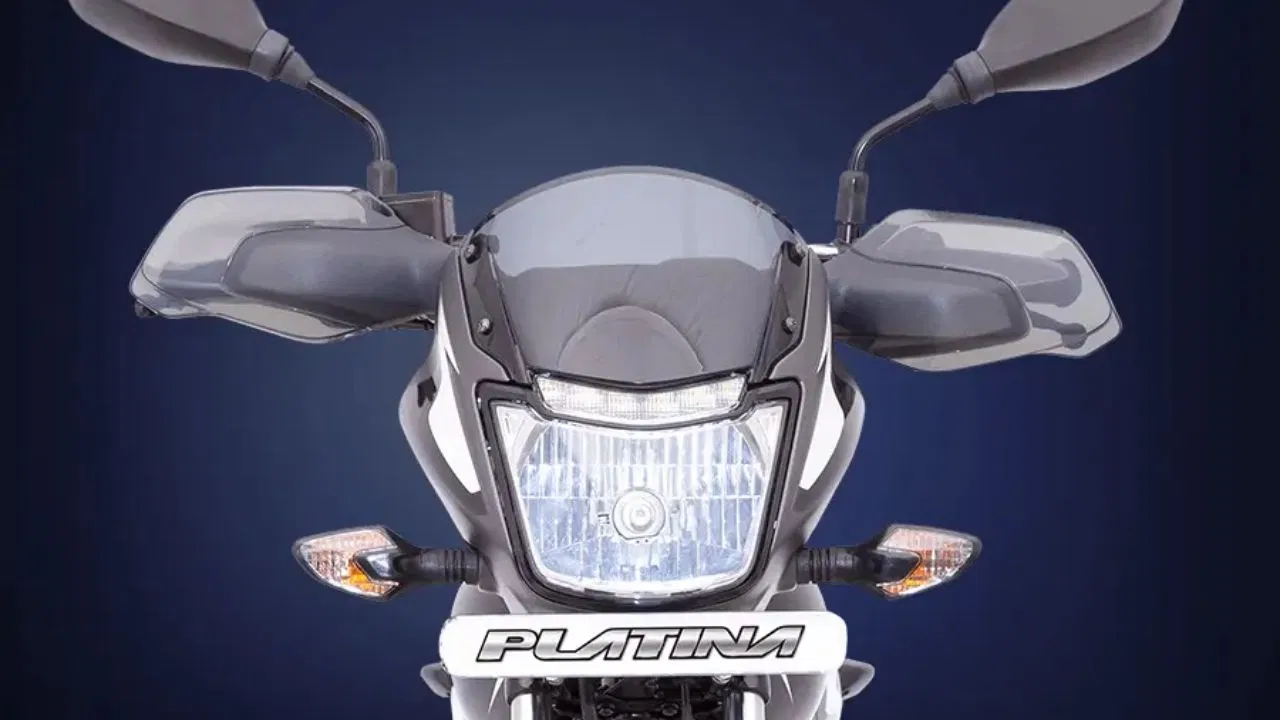

The new Bajaj Platina CNG country’s first dual-fuel motorcycle capable of running on both petrol and CNG. For a nation where millions ride daily through chaotic traffic and unpredictable fuel prices, this could be the two-wheeler version of the EV revolution. Just… quieter, cheaper, and more grounded in reality.
At first glance, the bike looks familiar that unmistakable Platina silhouette that’s dotted Indian roads for years. But look closer, and you’ll see subtle cues of a smarter future: a discreet CNG kit, a neatly integrated fuel switch, and a promise that could make daily commuting genuinely affordable again.
Designed for the Real India
The Platina CNG doesn’t scream for attention — it whispers practicality. Bajaj has clearly designed it for the masses: students juggling lectures and part-time jobs, delivery partners weaving through narrow bylanes, and office-goers trying to stretch every rupee between rising rents and fuel bills.
The bike carries Bajaj’s trademark long seat, roomy enough for two adults and a bag or two. The ergonomics are tuned for comfort, not posture-perfect showboating. You sit upright, relaxed, and ready to face whatever the next kilometer throws at you — pothole, traffic jam, or sudden downpour.
Design takeaways:
| Feature | Benefit |
|---|---|
| Long, cushioned seat | All-day comfort for rider & pillion |
| Lightweight frame | Easy maneuverability in city traffic |
| Functional body panels | Durability with style |
| Refined suspension | Smoother ride on bad roads |
Dual-Fuel Technology: The Real Star
Here’s where Bajaj’s innovation really shines. The Platina CNG comes equipped with a 124.58cc single-cylinder air-cooled engine that runs seamlessly on both petrol and CNG. Riders can toggle between the two with a flick of a handlebar switch — a first for Indian motorcycles.

In CNG mode, the bike churns out a respectable 9.5 PS of power and 9.7 Nm of torque, with a top speed hovering around 90 km/h. That’s plenty for urban commuting and short highway runs. But the real showstopper is the mileage figure — an astounding 90 km/kg on CNG. At current fuel rates, that could mean spending barely ₹1.20 per kilometer. For context, that’s almost half the cost of a 125cc petrol bike.
Why it matters:
| Mode | Mileage | Avg. Cost per km | Key Benefit |
|---|---|---|---|
| CNG | 90 km/kg | ₹1.2 (approx.) | Super-low running cost |
| Petrol | ~65 km/l | ₹2.3 (approx.) | Backup when CNG isn’t available |
Beyond savings, this hybrid approach lowers carbon emissions, making it an eco-conscious option for riders who aren’t ready (or able) to switch to electric just yet.
Handling and Safety: Built for India’s Roads
Anyone who’s ridden through Indian cities knows — comfort and control matter as much as mileage. Bajaj has reinforced the Platina’s structure to handle bumpy roads, unpredictable speed breakers, and quick halts. It packs telescopic front forks, twin rear shock absorbers, and a Combined Braking System (CBS) with a front disc and rear drum setup.
Add to that a bright LED headlamp, reflective tyres, and you’ve got a bike that’s ready for day-to-night commuting without drama.

Safety enhancements include:
- Front disc with CBS for stable braking
- Rear drum brake for balanced stops
- LED lights for visibility
- Strong chassis with better weight distribution
Smart Features for the Connected Commuter
It’s not just about fuel anymore — today’s riders expect a dose of smart tech. The Platina CNG delivers with a digital LCD instrument cluster, Bluetooth connectivity, and turn-by-turn navigation. You can get call and SMS alerts right on the dash. There’s even a USB charging port tucked in for your phone — because let’s be honest, most delivery riders live off Google Maps these days.
Other smart touches: an anti-theft alarm and a digital lock, giving urban riders a bit more peace of mind.
The Eco-Financial Equation
Here’s where things get interesting. Bajaj isn’t just selling a motorcycle; it’s offering a financially responsible lifestyle upgrade. Let’s crunch a quick comparison:
| Bike Type | Avg. Monthly Fuel Cost (1000 km) | Emissions | Refueling Ease |
|---|---|---|---|
| Petrol 125cc | ₹2,300–₹2,600 | High | Widely available |
| Platina CNG | ₹1,000–₹1,200 | 25–30% lower | Growing network |
| EV Scooter | ₹300–₹400 | Minimal | Limited charging infra |
With CNG stations expanding across urban India (as per Petroleum Planning & Analysis Cell data), the practicality gap between petrol and alternative fuels is narrowing fast.

Pricing and Ownership
The New Bajaj Platina CNG starts at ₹91,197 (ex-showroom) — which undercuts many 125cc rivals that run solely on petrol. Financing is easy, with EMIs hovering around ₹3,100/month, depending on the city and dealer. Bajaj’s nationwide service network and low maintenance costs add to its long-term value proposition.
Buyers can check government-backed CNG availability updates on the PNGRB portal before making their switch a smart step for those considering dual-fuel adoption.
Final Word: A Practical Revolution on Two Wheels
The New Bajaj Platina CNG feels like the right idea at the right time. While the auto industry chases high-end EVs, Bajaj has quietly built something for the real India — a machine that doesn’t demand lifestyle changes, just rewards smart choices.
It’s not flashy. It’s not futuristic in a sci-fi way. But it’s economical, eco-friendly, and deeply relevant. For millions of commuters, that’s the kind of innovation that matters most.
FAQs
It offers up to 90 km/kg on CNG and around 65 km/l on petrol, depending on riding style and conditions.

It’s primarily designed for city and semi-urban commuting, though short highway trips are easily manageable.
A simple handlebar switch allows riders to toggle between fuels without stopping the bike.
Front disc + CBS, LED headlamp, reflective tyres, and a strong suspension system for rough terrains.
Bajaj has begun phased rollouts across major Indian cities, with full availability expected by early 2026.
