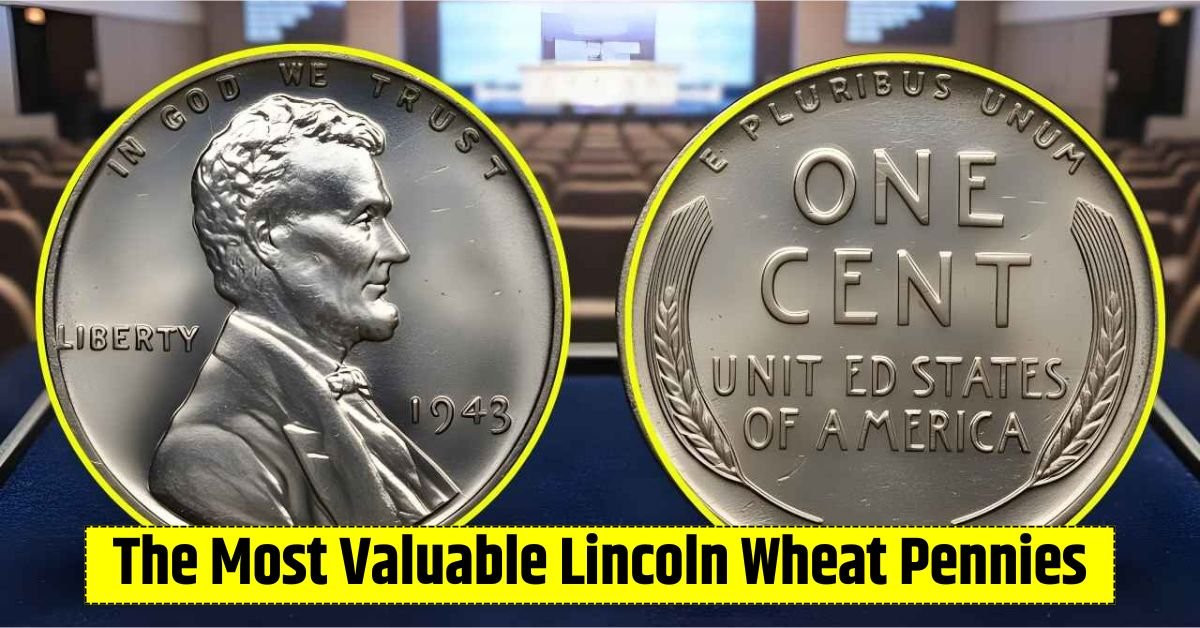

If you’ve ever dug through an old jar of change or sorted through coins at an estate sale, don’t skip the Lincoln Wheat pennies. That worn little cent might just be hiding a story and possibly a small fortune. In fact, some Lincoln Wheat pennies have sold for as much as $49,000 under the right conditions. It’s not clickbait. It’s not just hype. But it does require some real knowledge and care to separate a jackpot from just another copper coin.
So what makes a wheat penny worth nearly fifty grand? Let’s break it down.
Why the Lincoln Wheat Penny Valued at 49K Attracts Collectors
First minted in 1909 and produced until 1958, Lincoln Wheat pennies marked a major shift in American coinage. Not only did they feature a real person—President Abraham Lincoln—for the first time on a U.S. circulating coin, but they also became a canvas for small minting quirks, design shifts, and rare errors that collectors obsess over today.
Some of those quirks? They can turn a coin worth one cent into one worth 49,000 dollars or more.
Key Reasons Certain Wheat Pennies Are Valuable
| Feature Type | Notable Examples | Impact on Value |
|---|---|---|
| Low Mintage | 1909-S, 1931-S | Scarce supply drives demand |
| Designer Initials (VDB) | 1909-S VDB | Removed after public backlash |
| Doubled Die Obverse | 1955 DDO, 1917 DDO | Clear doubling = massive value |
| Planchet Errors | 1943 Bronze, 1944 Steel | Wrong metal = rare = $$$ |
| Exceptional Condition | MS66+ Grades | Higher grades get top dollar |
For instance, a 1955 Doubled Die Obverse penny in brilliant uncirculated condition (MS65+) can fetch well over $40,000 at auction, with top-tier examples approaching or surpassing that $49K benchmark. Rarity alone isn’t enough—it’s the combo of rarity and condition that hits the sweet spot.

How to Identify a Lincoln Wheat Penny Worth $49K
Don’t worry—you don’t need a lab. Just a steady hand, decent lighting, and a few tools can get you started. Most valuable finds began with someone just looking closely.
Step-by-Step Checklist
- Look at the date and mint mark
- Is it a known key date? (1909-S, 1914-D, 1931-S)
- Mint marks appear under the date: “D” (Denver), “S” (San Francisco), or none (Philadelphia).
- Inspect for VDB initials
- On the 1909 reverse, check the bottom near the rim for “V.D.B.”
- If it’s a 1909-S VDB, that’s serious money.
- Check for doubling
- Use a 10x loupe or a macro phone lens to inspect the obverse.
- On 1955 DDOs, look for clear doubling on “LIBERTY,” the date, and “IN GOD WE TRUST.”
- Weigh and measure if needed
- If your 1943 penny isn’t magnetic (should be steel), weigh it.
- A copper 1943 penny should weigh around 3.11 grams. That’s a legendary error coin.
- Assess condition
- Sharp hair detail? Strong rims? No heavy scratches?
- Full “wheat lines” on the reverse mean it’s in better shape than most.
Tools That Help
| Tool | Use |
|---|---|
| 10x Jeweler’s Loupe | Spot fine doubling and minting flaws |
| Digital Scale (0.01g) | Check for wrong-metal planchets |
| Caliper | Confirm diameter matches U.S. penny size |
| Macro Camera or Phone Lens | Capture images for appraisal |
When to Get Professional Verification
You think your coin could be the real deal. Now what?
Do not clean it. Cleaning destroys collector value faster than you can say “brillo pad.”
Instead, if the coin shows any of the following, consider sending it to a grading service like PCGS, NGC, or ANACS:

- Obvious doubling or errors
- Rare date and mintmark combo
- Uncirculated or exceptionally sharp condition
What Graders Look For
- Authenticity — Is it real, or an altered coin?
- Strike Quality — Are the high points well-defined?
- Surface Condition — No scratches, environmental damage, or cleaning marks?
- Error Confirmation — For example, is that really a doubled die?
Grading not only confirms your find but also boosts resale value—serious buyers pay more for slabbed coins.
Practical Selling Options for High-Value Wheat Pennies
So your coin checks out. You’re holding a rare Lincoln Wheat penny, maybe even one approaching that coveted $49,000 mark. How do you sell it?
Where to Sell
| Option | Best For | Considerations |
|---|---|---|
| Heritage Auctions, Stack’s | Top-tier coins, max value | May take time, seller fees apply |
| PCGS or NGC Marketplace | Graded coins | Trusted buyers, slower sale process |
| Reputable Coin Dealers | Fast local sale | Lower offers due to dealer margins |
| eBay (graded only) | Exposure, flexibility | Must list with photos, buyer protection |
| Coin Shows/Conventions | Serious buyers, in-person feedback | Must travel, requires coin knowledge |
Be cautious of quick cash offers unless you’ve had multiple appraisals.
Small Real-World Case Study
A retired teacher in Pennsylvania inherited an old coin collection from her grandfather. Among the wheat pennies was a 1955 Doubled Die Obverse with surprisingly little wear. She noticed the strong doubling using a $10 loupe from Amazon and sent photos to a local coin dealer, who confirmed its potential.

She submitted it to NGC, which graded it MS64 Red Brown. The coin later sold at auction for $46,800, just shy of the elusive 49K mark—but not bad for a penny that sat in a closet for 40 years.
Moral of the story: Learn, look, and verify. You don’t need to be a pro to hit gold (or copper).
Final Checklist Before You Act
Use this quick guide to make your next steps count:
- Rare date or mint mark?
- Doubled features? VDB initials?
- No cleaning or obvious damage?
- Photographed under good lighting?
- Compared against PCGS price guide or Heritage Auctions records?
- Ready to submit for grading?
If you answered yes to most of those—you might have something big.

Did You Know?
The 1943 bronze Wheat penny, accidentally struck during WWII, has sold for over $1.7 million. Fewer than 20 are known. So if your 1943 penny isn’t magnetic, stop everything and weigh it—you could be looking at history.
FAQs
The most valuable include 1909-S VDB, 1914-D, 1922 no-D, 1955 DDO, and any confirmed 1943 bronze error.
Use top grading services like PCGS, NGC, or ANACS for professional certification and market legitimacy.
No. Cleaning ruins surface integrity and can reduce value drastically.
It’s rare, but yes. Estate sales, coin rolls, and older collections are your best bet.
Those are the initials of Victor David Brenner, the original designer of the 1909 coin.
