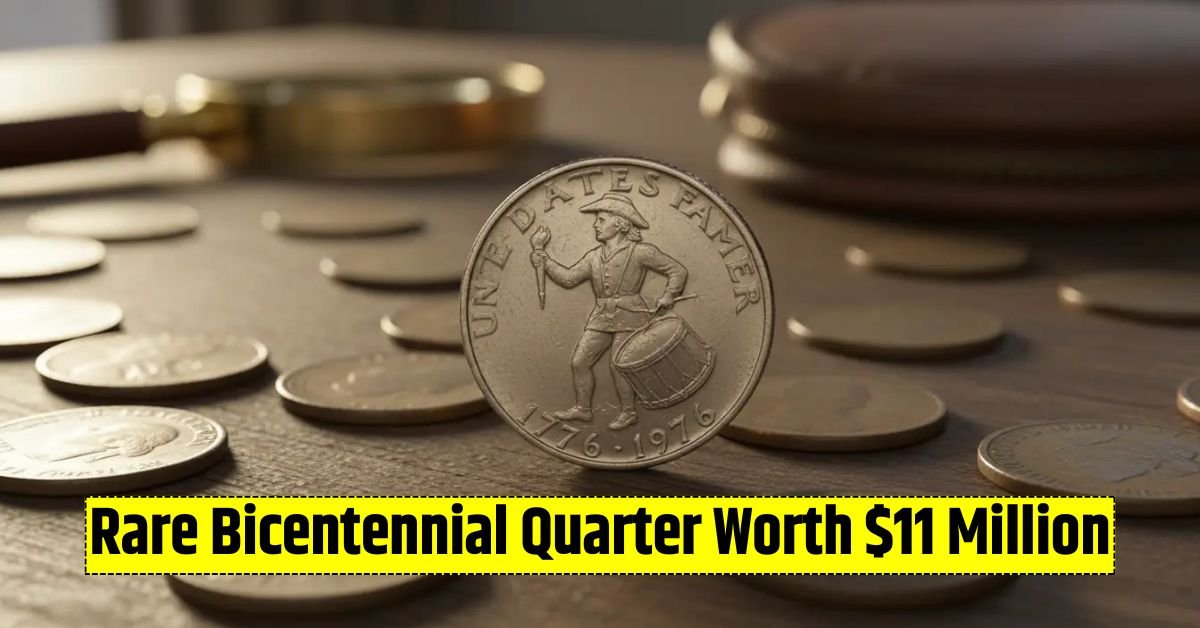

Finding a rare coin in your loose change might feel like hitting the jackpot—and occasionally, it is. But when it comes to Bicentennial quarters, excitement needs to be paired with a careful, methodical approach. These special-edition coins were minted by the hundreds of millions in 1975 and 1976 to honor America’s 200th birthday, so most are still only worth 25 cents. That said, a few unusual specimens can sell for thousands—just not millions, despite what some viral claims suggest.
Let’s cut through the hype and get into what really makes a Bicentennial quarter valuable—and how you can tell if you’re holding onto something rare.
What Is a Bicentennial Quarter, and Why Does It Matter?
The Bicentennial quarter was a one-time design update celebrating the United States’ 200th anniversary. Instead of the usual eagle on the reverse, these quarters feature a colonial drummer boy and the dual date 1776–1976. The obverse still shows George Washington, designed by John Flanagan, but the reverse was created by Jack L. Ahr as part of a national competition.
Here’s the key thing: over 1.6 billion of these coins were made across the Philadelphia, Denver, and San Francisco mints. Most are incredibly common. You’ve probably handled hundreds without noticing. But a tiny number—due to mint errors, rare planchets, or pristine condition—have real collector value.
Why Some Bicentennial Quarters Are Actually Valuable
The vast majority of Bicentennial quarters are worth face value. A worn one isn’t rare—it’s just old. But there are exceptions:

- Minting errors: These include off-center strikes, doubled dies, or coins struck on the wrong type of metal.
- High-grade examples: Coins graded MS67 or higher by services like PCGS or NGC can sell for hundreds—or even thousands—if demand is strong.
- Proof and silver-clad coins: Some were made specifically for collector sets, including 40% silver versions. These were not issued for circulation and are generally found in original U.S. Mint packaging or coin collections.
Table: Bicentennial Quarter Types and Potential Value
| Type | Mintage Location | Estimated Value Range (2024) | Notes |
|---|---|---|---|
| Circulation Strike | Philly/Denver | $0.25 – $2 | Most common, no premium unless high grade |
| Proof (Copper-Nickel) | San Francisco | $1 – $10 | Mirror-like finish, from proof sets |
| 40% Silver Proof | San Francisco | $10 – $25 | Sold in collector sets only |
| 40% Silver Uncirculated | San Francisco | $7 – $20 | Not for circulation, found in Mint sets |
| Major Doubled Die | Any | $500 – $2,000+ | Must be verified by PCGS/NGC |
| Off-Center/Wrong Planchet | Any | $100 – $5,000+ | Value depends on severity and rarity |
How to Check for Rare Bicentennial Quarter Features
It’s all in the details. You’ll need good lighting, a 10x magnifying loupe, and ideally a digital scale (a wrong-metal coin may have different weight). Here’s what to look for:
Key Error Types
- Doubled Die: Check for clear doubling in the letters “LIBERTY,” the date “1776–1976,” or parts of the drummer.
- Off-Center Strikes: If the design is clearly misaligned, it might be valuable.
- Wrong Planchet: These are rare but real. A coin struck on a foreign planchet or one intended for another denomination (like a dime) can be worth thousands.
- Clipped Planchet or Broadstrike: These can add value but need to be authenticated.
If you find anything unusual, don’t clean it. Just take high-quality photos and keep it protected.
Where to Get a Bicentennial Quarter Appraised and Graded
Getting a coin graded isn’t just for bragging rights—it gives it market legitimacy.
Top Grading Services
| Grading Company | Website | Known For |
|---|---|---|
| PCGS | pcgs.com | High-grade market leader |
| NGC | ngccoin.com | Consistent grading, global reach |
| ANACS | anacs.com | Oldest U.S. grading company |
Expect to pay between $20–$60 per coin, plus shipping and insurance. For coins worth thousands, it’s a no-brainer. But for borderline cases, get a second opinion from a local numismatic dealer before you commit.

What Are Realistic Prices for Bicentennial Quarters?
Let’s keep it real. Most Bicentennial quarters, even if decades old, are not rare.
Market Snapshot
- Circulated coins: 25¢ to $1. Maybe $5 if it’s uncommonly crisp.
- Proof silver coins: $10–$25 depending on condition.
- Top-graded MS67+ examples: $800–$4,000, often from original rolls.
- Verified error coins: $500–$10,000+, with auction records to support.
Ignore those breathless social media posts claiming “$11 million Bicentennial quarter found in change!” There are no verified public sales anywhere near that level.
Real Collector Story: A Verified Bicentennial Quarter Error
In 2022, a collector in Georgia found a Bicentennial quarter that looked off—the word “LIBERTY” appeared doubled, and the strike was unusually sharp.
They resisted the urge to polish it (smart move) and used a macro lens to take detailed photos. Two local dealers confirmed it was likely a doubled die, and recommended sending it to PCGS. Grading confirmed the error, and the coin later sold at auction for over $3,000.

That’s the power of patience, verification, and expert grading.
Final Tips for Would-Be Coin Finders
- Don’t clean the coin—seriously, just don’t.
- Store it in a non-PVC flip or hard holder.
- Get clear photos with natural light or a macro camera.
- Talk to two or more dealers before jumping into grading.
- Use actual grading company websites or coin auction archives—not just Reddit or YouTube hype—to research.
Grading takes time, and auction houses operate on their own schedules. So be prepared for a slow process, but one that can lead to real value.
Claim: Bicentennial quarters have sold for $11 million.
Reality: As of 2024, no verified auction records show a Bicentennial quarter selling anywhere near $1 million—let alone $11 million. The highest confirmed sales for Bicentennial error coins top out in the low five figures. Always verify values with established auction records or grading company price guides before getting too excited.

FAQs
Roughly 1.6 billion they were mass-produced for circulation.
They’re not rare but were only sold in collector sets. They’re worth more than face value, especially in top condition.
Use a loupe to check for errors like doubling, off-center strikes, or unusual surfaces. Then consult a pro.
No. Cleaning reduces value and can even void grading eligibility.
It’s possible, but unlikely. Most high-value examples are in collector hands or graded collections.
