
A racing mind at bedtime can feel like a cruel joke. Just when your body’s ready to rest, your brain decides it’s showtime spinning stories, revisiting to-do lists, replaying that awkward thing you said seven years ago. If this sounds familiar, you’re far from alone. In fact, mental overstimulation is now one of the top sleep disruptors, thanks to our screen-heavy, stress-fueled, always-scrolling lives.
But here’s the good news: you don’t need to overhaul your life or pop sleeping pills to quiet the noise. The real antidote? Gentle, restorative yoga. Not the sweaty kind that feels like a cardio class in disguise—but slow, intentional movements that coax your nervous system into letting go. Think of it as a lullaby for your brain.
Let’s break down five yoga poses you can use tonight to calm your mind, release tension, and invite sleep the way nature intended—slowly, gently, and deeply.
Why Yoga Calms the Mind Before Bed
To understand why these poses work, it helps to understand what’s actually keeping you up.
When your mind is racing, your body is often stuck in sympathetic overdrive—that’s fight-or-flight mode. Heart rate’s up. Breathing is shallow. Muscles are tense. You might not notice it, but your body is preparing for action, not rest.
The goal of bedtime yoga is to trigger the parasympathetic nervous system—the rest-and-digest mode. This is your body’s natural “power down” setting.
Gentle yoga helps shift that gear by:
- Slowing the breath
- Grounding the body
- Releasing tight muscles
- Reducing cortisol (the stress hormone)
- Bringing awareness inward
Once the body settles, the mind usually follows. And that’s where the magic happens.
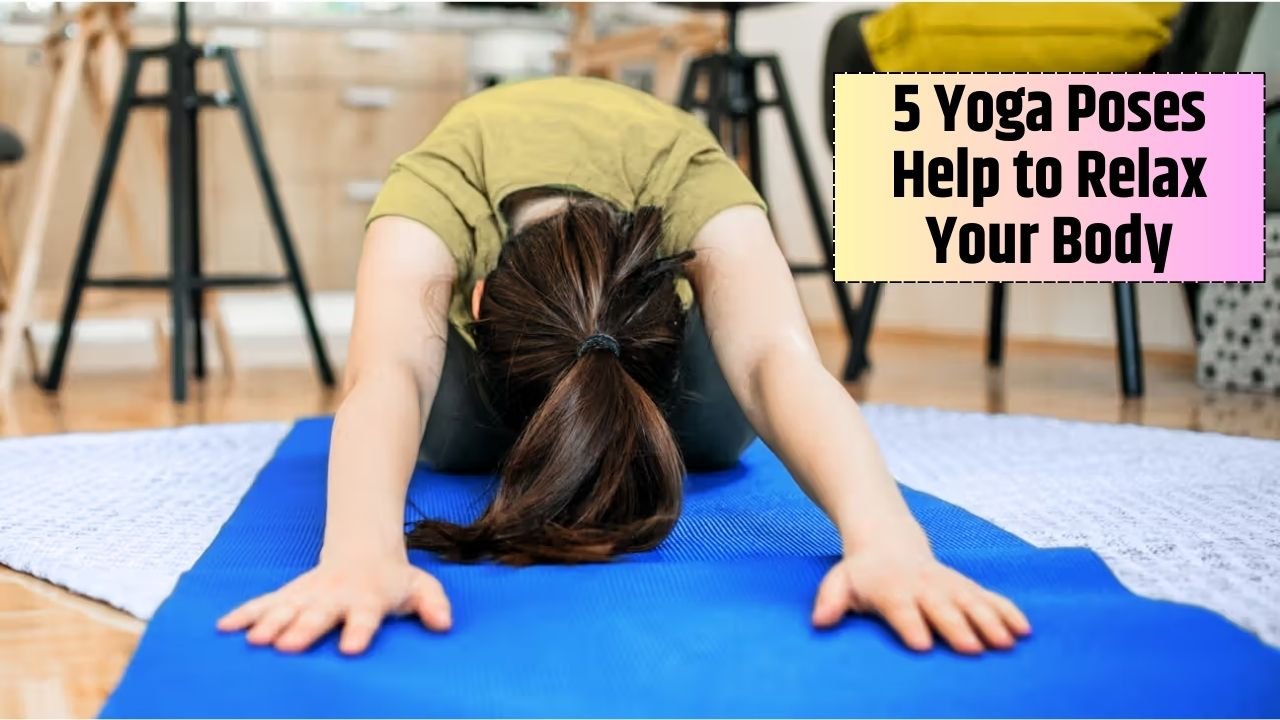
1. Child’s Pose (Balasana)
Why it works:
Child’s Pose is a sanctuary pose—it immediately creates a sense of being held and safe. It softens the spine, relaxes the belly, and grounds you into stillness.
How to do it:
- Kneel on the mat with your big toes touching and knees apart
- Sit back on your heels
- Fold forward, resting your forehead on the floor (or a pillow)
- Arms can stretch forward or relax alongside your body
Breath cue:
Inhale into your lower back. Exhale slowly and imagine tension melting down into the floor.
Duration: 1–3 minutes (or longer if it feels right)
Why it helps:
Child’s Pose turns your attention inward and tells your brain: there’s nothing to solve right now. It’s like hitting the mute button on your thoughts.
2. Seated Forward Fold (Paschimottanasana – Gentle Version)
Why it works:
Forward folds help draw energy downward, both physically and mentally. They calm the nervous system and quiet overstimulation.
How to do it:
- Sit with your legs extended
- Slightly bend your knees if needed
- Inhale to lengthen the spine
- Exhale and hinge forward from the hips
- Let your hands rest wherever they land—no need to touch your toes
Breath cue:
Let each exhale soften your shoulders and spine. You’re not trying to “stretch”—you’re trying to settle.
Duration: 1–2 minutes
Why it helps:
It’s like bowing inward. This pose helps pull your awareness out of your head and into your breath. A go-to for those nights when thoughts won’t stop looping.
3. Legs Up the Wall (Viparita Karani)
Why it works:
This is the ultimate relaxation pose. It improves blood flow, drains fatigue from the legs, and slows everything down—heart rate, thoughts, even digestion.

How to do it:
- Sit sideways next to a wall
- Swing your legs up as you lie down, hips close to the wall
- Rest your arms by your sides, palms up
- Optional: Place a folded blanket under your hips for extra support
Breath cue:
Try a simple 4–6 breath count: inhale for 4, exhale for 6. The long exhale tells your body to chill.
Duration: 3–5 minutes (set a soft timer if needed)
Why it helps:
This one’s a nervous system reset. If your brain is buzzing and your body’s tense, this pose creates an immediate downshift.
4. Supine Spinal Twist (Supta Matsyendrasana)
Why it works:
Twists unlock tension in the spine and abdomen, where stress likes to settle. This pose also helps balance the right and left sides of your body and brain.
How to do it:
- Lie on your back
- Hug your right knee into your chest
- Gently guide it across your body to the left
- Extend your right arm out to the side and look to the right
- Repeat on the other side
Breath cue:
Breathe into the ribs. With every exhale, imagine your thoughts unwinding like a spiral.
Duration: 1–2 minutes each side
Why it helps:
Many people report a mental sigh of relief in this pose. It’s a physical release that translates into emotional quiet. Like wringing out a sponge.

5. Corpse Pose with Body Scan (Savasana)
Why it works:
This is the finishing pose—and possibly the most important. In stillness, your body absorbs all the calming signals you just sent. Pair it with a body scan and it becomes a meditative practice all by itself.
How to do it:
- Lie flat on your back, arms and legs comfortably spread
- Close your eyes
- Let the feet fall outward, shoulders soften
- Begin a slow mental scan from your toes to your head
Body scan tip:
As you move attention through each body part, silently say “relax” or “let go.” If thoughts interrupt, let them drift without judgment.
Breath cue:
Breathe naturally. No need to control it—just notice it.
Duration: 5–7 minutes (many fall asleep here—and that’s the goal)
Why it helps:
Savasana shifts you from doing to being. It teaches the brain to stop chasing thoughts and just rest. With practice, it becomes a signal to your body that the day is over.
Making It a Nightly Ritual
You don’t need to do all five poses every night. Even just two or three can help.
Here’s how to make it stick:
- Do it at the same time each night
- Keep the lights low (candlelight or a salt lamp works wonders)
- No phone before or after
- Skip anything that feels too “active”
- Let go of expectations—some nights you’ll feel calm, others not. That’s okay.
The key is consistency. Over time, your brain will associate these poses with winding down, making it easier to fall asleep naturally.
Common Mistakes to Avoid
- Forcing your body into deep stretches
- Holding your breath or rushing through poses
- Using yoga as “another task to finish” instead of a wind-down
- Checking your phone right after (kills the effect instantly)
This practice isn’t about achievement. It’s about letting go.
You can’t fight a restless mind with more thinking. You need to shift your body into a state that makes sleep possible.
These yoga poses don’t put you to sleep in the way a pill might—but they create the conditions where sleep becomes inevitable. Like dimming the lights in a room instead of flipping a switch.
So tonight, roll out your mat. Move slowly. Breathe deeply. Let go of the day, one pose at a time.
You might be surprised how quiet your mind can become—when you stop asking it to.
FAQs
Not at all. These poses are gentle and can be supported with pillows or blankets.
Anywhere from 10 to 20 minutes is enough. Even five minutes can make a difference if done mindfully.
Yes, most poses can be modified for bed especially Legs Up the Wall, Savasana, and gentle twists.
For many people, yes. It reduces nervous system activation and helps transition into sleep more naturally.
That’s normal. Just keep bringing your focus back to your breath and body. Over time, the mind learns to settle.
