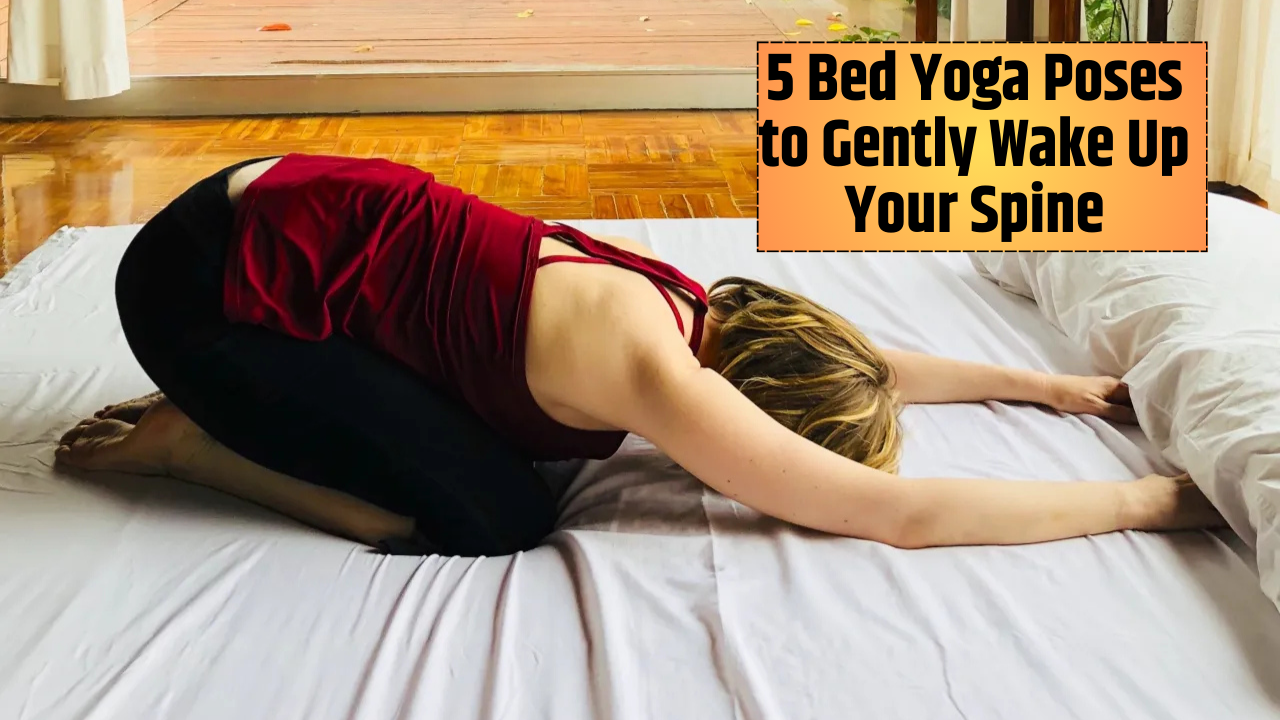

It’s gravity and not in a poetic sense. Just pure, heavy, almost uncomfortable weight. The kind that wraps around your lower back like an old friend who overstayed their welcome. You haven’t even sat up yet, and already, your spine is filing complaints. Morning hits differently when your body wakes up slower than your mind.
But here’s a gentle question to ask yourself before the day takes over: What if you didn’t rush past that stiffness? What if you listened, lingered, and moved not out of urgency but out of care?
Because those first few moments—before the coffee, before the commute—can quietly reset your body if you let them. And you don’t even have to get out of bed.
Why Morning Bed Yoga Feels Like a Reset Button for a Stiff Back
Your back doesn’t clock out at night—it just shifts jobs. While you’re dreaming (or tossing and turning), your spine decompresses, then subtly recoils, adapting to how you sleep. Muscles cool, fascia firms up, circulation slows. Then the alarm blares, and your brain is suddenly on—but your back? It’s still stuck in yesterday.
That stiffness? It’s not laziness. It’s your body’s way of saying, “Slow down. I’m still catching up.” Instead of springing upright and asking your joints to carry the full load immediately, bed yoga gives you a transition zone. It’s the soft handshake between sleep and movement. With gravity muted by the mattress, your spine can stretch without strain, your breath can guide you, and your nervous system can stay grounded.
And unlike gym workouts or vinyasa flows, this practice isn’t about pushing. It’s about sensing. Tuning in. Getting curious about how your body wants to wake up.
Turning Your Bed Into a Gentle Morning Yoga Space
No need for incense, yoga mats, or fancy leggings. You’re in pajamas. Your hair’s doing its own thing. You’ve still got sleep lines on your cheek. And that’s the beauty of it—it’s raw, real, and ready.
Start by clearing a bit of space. Kick the covers down or drape them over your legs. If your mattress is super soft, you can slide a towel under your lower back for a little more support. Whether you let the sunlight in or keep your eyes half-closed, just make sure it feels calm—not jarring.

Then, just breathe. Not performative deep breathing. Just observe. Is it shallow? Tight? Soft? Imagine your breath as a quiet ocean tide, slowly starting to roll in and out. That awareness is your anchor.
Each pose from here isn’t something to nail—it’s something to notice.
Morning Bed Yoga Sequence for a Stiff Back
| Yoga Pose | Primary Benefit | Ideal Duration |
|---|---|---|
| Full-Body Wake-Up Stretch | Energizes the spine and boosts morning blood flow | 3–5 deep breaths |
| Knees-to-Chest Rocking | Eases stiffness and soothes the lower back | 30–60 seconds |
| Supine Twist | Gently decompresses mid and lower spine | 5–8 breaths per side |
| Figure-Four Hip Release | Unlocks hips to relieve lower-back tension | 5–8 breaths per side |
| Mini Bridge Lifts | Strengthens glutes and core for spinal support | 6–10 slow repetitions |
Pose One: The Lazy Stretch That Gently Reawakens Your Entire Spine
You’re still lying there, back pressed to the mattress, not quite ready to face the day. Perfect. Reach your arms overhead. Point or flex your toes—whatever feels natural. Stretch in both directions, as if someone’s tugging your fingers north and your heels south. Feel your ribs expand like bellows.
This isn’t a dramatic reach. It’s a slow unfurling. Like you’re gently pressing “on” for your body.
Alternate sides if you like—reaching through the right arm and leg, then the left. Somewhere along the line, you’ll feel something shift. A little warmth. A little release. That’s your spine saying, “Thanks. I needed that.”
Pose Two: Soft Knees-to-Chest Rocking to Release Lower Back Tension
Now, bend your knees and bring one leg, then the other, toward your chest. Hug them however feels easiest—over the shins, behind the thighs, whatever lets your shoulders stay soft.
Let the knees drift wide. Rock gently side to side. You’re not trying to do anything here—just coaxing your lower spine out of its overnight stiffness.

This motion massages your back against the mattress in a way that’s surprisingly comforting. Like giving your own spine a morning hello.
Pose Three: Easy Supine Twist to Melt Away Nighttime Tightness
Drop your arms out into a soft T-shape. Keep knees bent, feet lifted, then slowly let both knees drift to one side. Don’t worry if they don’t touch the bed—this isn’t about depth. It’s about comfort.
A gentle twist like this releases tension in your low back and massages your internal organs. Turn your head in the opposite direction (if your neck agrees) and breathe into the stretch.
Each breath expands space across your ribs. Each exhale invites gravity to help. You’ll often hear little clicks or pops as tension releases. That’s not something breaking—it’s something letting go.
Switch sides when you’re ready.
Pose Four: Figure-Four Stretch to Unlock Hips and Ease Back Pressure
Cross your right ankle over your left thigh—creating a shape like the number four. Already, you might feel a pull in your hip or glute. If it’s enough, stay. If you want more, lift the left foot and gently thread your hands behind your thigh.
Don’t force anything. Let your breath guide you. Inhale, soften. Exhale, maybe draw in a little deeper. Each breath melts resistance like warm water over stone.

Then switch sides. Often, one side will feel tighter. That’s fine. Just means you’re listening to a body that’s lived differently on each side.
Pose Five: Small Bridge Lifts That Strengthen and Support the Spine
Time to wake up the support crew—your glutes, hamstrings, and core. These muscles are your spine’s best friends throughout the day.
Plant your feet, knees bent. Inhale, then exhale as you press into your feet and roll your hips upward, lifting your spine one vertebra at a time. Don’t go too high. This is not a workout. Just a gentle activation.
At the top, engage your glutes like you’re drawing them toward each other. Exhale as you slowly roll back down.
Repeat 6–10 times, syncing movement with breath. It’s subtle. But powerful.
Rising From Bed: Taking That Loose, Calm Feeling Into Your Day
Now, roll to one side and pause. You’ll notice something. You’re not just “up.” You’re grounded. Centered. Less rushed.
Your back doesn’t ache the same way. Your legs feel connected. Your core is quietly awake. And emotionally, there’s this strange little spark of peace. All because you gave your body five honest minutes before handing it over to the world.

Keep doing this, and you’ll start to know your body better than your phone screen. You’ll predict where tension hides. You’ll feel yourself getting stronger—not in flashy ways, but in deeply useful ones. And you’ll start each day with presence, instead of pressure.
Because when your body feels supported, so do you.
FAQs
Nope. These poses are more about ease than flexibility. They work for all body types and skill levels.
Even 5–10 minutes can make a big difference. It’s more about consistency than length.
Generally yes, but listen to your body. If any pose causes discomfort, skip it or consult a physical therapist.
You can still practice just add a folded towel or firm cushion under key areas for support.
Not exactly it complements them. Morning bed yoga is about gentle mobility and support, not building endurance or flexibility.
