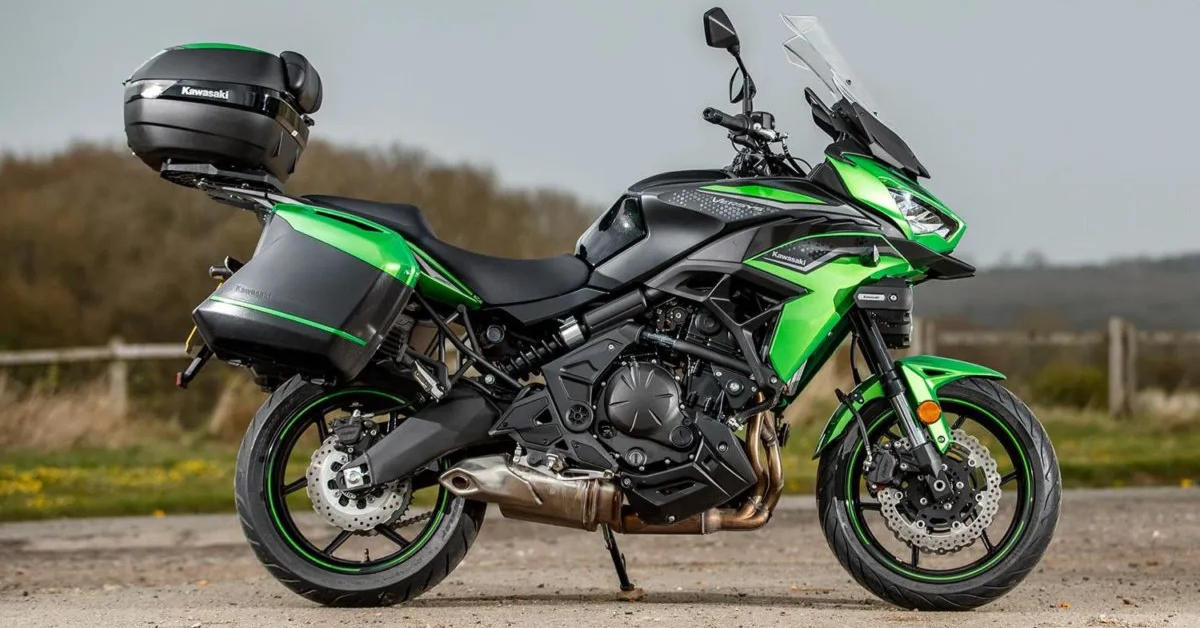

The 2026 Kawasaki Versys 650 has officially landed in India, and while it may not bring an avalanche of changes, it’s still making waves in the adventure-touring space albeit quietly. Think of this as a mature refresh rather than a full-blown overhaul. Same dependable engine, same rock-solid hardware, but with a sharper suit and a slight price nudge. For many touring enthusiasts, that’s all the excuse they need to upgrade.
Let’s get under the skin of this middleweight ADV and see why it still deserves your attention.
Launch & Pricing
Kawasaki launched the 2026 Versys 650 in India with an ex-showroom price of ₹8.63 lakh, marking a ₹15,000 hike over the previous model year. It’s not a budget motorcycle — but then again, middleweight tourers rarely are. What you’re paying for is versatility, reliability, and long-haul comfort, all wrapped in a more aggressive look.
Curiously, Kawasaki will continue selling the 2025 model alongside the MY26 version, giving buyers a bit of a palette choice depending on how bold or understated they like their bike’s livery. Both models, however, are mechanically identical.
And that’s key: no performance upgrades, just a fresh paint job — but sometimes, that’s enough to keep a solid product feeling current.
Design
So, what does the 2026 Versys 650 actually look like? Imagine the same muscular frame and ADV stance, now bathed in Metallic Graphite Gray and Metallic Spark Black. It’s subtle, but sleeker. Less “look at me,” more “I’m here to tour the subcontinent.”
The twin LED headlamps, beak-like front cowl, and that tall adjustable windscreen are all carried forward — and that’s not a bad thing. The Versys has always had a distinctive, slightly aggressive look that screams capability without going over the top.

No new bodywork here, but the revised graphics and darker palette add a stealthy, purposeful edge. If you’re into mature, adventure-focused design — this hits the mark.
Features
Kawasaki hasn’t gone gadget-crazy with the Versys 650, but it’s not barebones either. Here’s what you’re getting:
- 4.3-inch TFT colour display
- Smartphone connectivity via Bluetooth
- Kawasaki Traction Control (KTRC) with 2 levels
- Dual-channel ABS
- Economical Riding Indicator
- Four-way adjustable windscreen
That TFT screen is clear and intuitive, letting you pair your phone for call/SMS alerts and turn-by-turn nav support. The traction control isn’t just for marketing — it’s useful when road conditions change mid-tour, like sudden rain or loose gravel.
What it doesn’t have: riding modes, cruise control, or cornering ABS. But in this segment and price bracket, the essentials are covered, and they work well.
Engine
Kawasaki’s stuck to the golden formula here — no tweaks, no tunes, just the same 649cc, liquid-cooled, parallel-twin engine that’s powered generations of Versys and Ninja 650s. It’s proven, punchy, and smooth in real-world touring conditions.
Here’s a quick spec rundown:

| Specification | Value |
|---|---|
| Engine Type | 649cc, liquid-cooled, twin |
| Power Output | 67 hp @ 8,500 rpm |
| Torque | 61 Nm @ 7,000 rpm |
| Transmission | 6-speed manual gearbox |
On the road, this means effortless cruising at 120 km/h, quick overtakes in the mid-range, and a tractable throttle in slow city traffic. No hiccups, no drama. If it ain’t broke…
Hardware
Kawasaki hasn’t messed with the suspension or braking setup either — and that’s honestly a relief. The Versys 650 has long been praised for its balance, ride quality, and adjustability.
Here’s what’s underneath:
- Front Suspension: 41 mm upside-down forks, adjustable rebound + preload
- Rear Suspension: Mono-shock with remote preload adjuster
- Brakes: 300 mm dual semi-floating front discs, 250 mm rear disc
- Calipers: Dual-piston front, single-piston rear
That remote preload adjuster at the rear is a gift for tourers. Whether you’re solo or riding with luggage and a pillion, adjusting your suspension is just a twist away — no tools, no workshop visits.
Brakes are sharp, progressive, and predictable. Even fully loaded, you won’t be left wishing for more bite.
Dimensions
The Versys 650 has always felt like a tall, commanding machine and that hasn’t changed. With 845 mm seat height, it’s best suited for riders over 5’9″, especially when stopping in traffic. However, thanks to the narrow seat design, shorter riders can still tip-toe confidently.

Here are the key figures:
| Parameter | Value |
|---|---|
| Wheelbase | 1,415 mm |
| Ground Clearance | 170 mm |
| Seat Height | 845 mm |
| Curb Weight | 220 kg |
| Fuel Tank Capacity | 21 litres |
| Estimated Dry Weight | 201 kg |
The 21-litre tank is great for long hauls — think 500+ km range without anxiety. Combined with a comfortable saddle and upright ergonomics, it makes the Versys ideal for multi-day rides across varied terrain.
Verdict
So, what do we make of the 2026 Kawasaki Versys 650?
It’s not flashy. It’s not cutting-edge. But it’s rock-solid — and for many riders, that’s exactly the point. You’re getting a capable, refined machine with enough tech, proven performance, and comfort to handle just about anything India’s roads throw at it.
Yes, the price is creeping up. And no, it doesn’t have the flashy bells and whistles some rivals offer. But the core experience — that planted ride, that stress-free engine, that tall touring posture — remains best-in-class.
If you’re hunting for a middleweight adventure tourer that’s practical, road-friendly, and doesn’t need constant TLC, the 2026 Versys 650 is still one of the smartest buys out there.

FAQs
Only the new paint scheme (Metallic Graphite Gray + Metallic Spark Black). No mechanical or feature changes.
No, it continues without cruise control or dedicated ride modes. It does include traction control and smartphone connectivity.
It delivers 67 hp and 61 Nm from a 649cc parallel-twin smooth, reliable power delivery, especially in mid-range.
Yes. The seat is wide and comfortable, and rear preload can be easily adjusted for extra weight.
It has a seat height of 845 mm. While manageable, shorter riders may need time to adjust to its stance.
