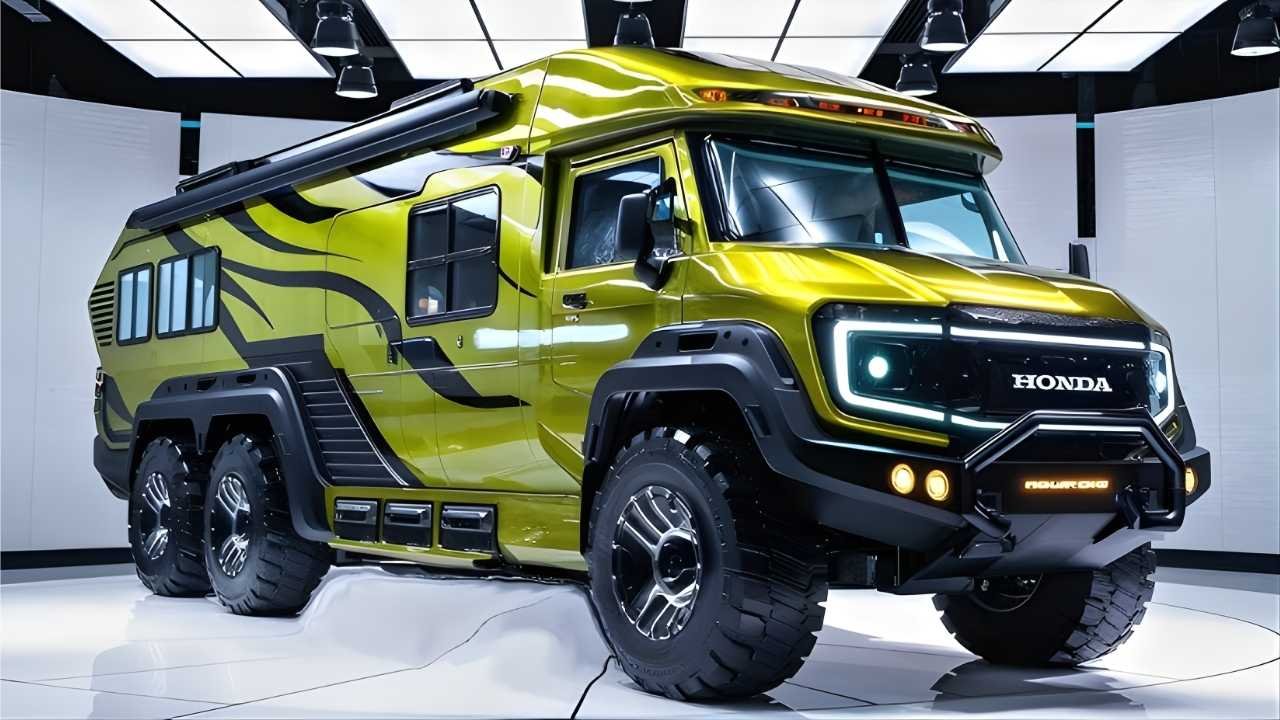

The idea of Honda entering the motorhome space might sound surprising until you think about it. For decades, Honda has been the go-to brand for smooth drivability, bulletproof reliability, and practical engineering. Now, with the 2026 Honda Motorhome, the brand brings all those strengths to a new kind of traveler: the road tripper who wants RV freedom without the clunky, intimidating driving experience that usually comes with it.
While most RVs feel like you’re piloting a small apartment down the highway, Honda’s approach appears refreshingly different—think “oversized Accord with a bed and bathroom,” not “mini semi-truck.” This isn’t just about going places; it’s about enjoying the drive as much as the destination.
Built Around Road Feel: A Honda Signature
The phrase “road feel” doesn’t usually come up in RV conversations. But for Honda, it’s foundational. From the Civic to the Ridgeline, the brand has consistently prioritized driver connection and predictable handling. And with the 2026 motorhome, Honda seems intent on preserving that DNA.
Instead of a floaty, vague ride, early reports suggest this motorhome will feel planted and composed, with suspension tuning that absorbs rough patches without turning into a jellyfish. The focus? Keep the driver in control, keep the passengers comfortable, and keep the journey fatigue-free.
| Expected Driving Traits | Why It Matters |
|---|---|
| Predictable steering feel | Less fatigue on long trips |
| Balanced suspension tuning | Comfort without excessive body motion |
| Low noise, vibration, harshness (NVH) | Quieter cabin, more relaxed passengers |
| Stable highway performance | Confidence in crosswinds and high speeds |
City Streets: A Motorhome That Doesn’t Hate Traffic
Let’s face it—most motorhomes are miserable in cities. But Honda is leaning into daily-drivability with this model, aiming to make low-speed maneuvering far less painful. Expect light steering at parking speeds, tight turning radiuses for its size, and a chassis tuned to handle potholes, speed bumps, and tight corners without shaking the cabinetry loose.
The suspension reportedly soaks up jolts without excessive body sway, which helps keep both driver and passengers calm—even in crowded areas. Low-speed ride quality, especially over broken pavement, is expected to be one of this motorhome’s standout features.
And noise isolation? If Honda applies its usual NVH playbook, road and wind noise will be kept to a minimum—even in city chaos.

On the Highway: Comfort and Composure
Once you’re cruising on the open road, the 2026 Honda Motorhome is expected to shine. The suspension and chassis tuning aim for straight-line stability, meaning fewer corrections and less “drift” when passing trucks or dealing with crosswinds.
Drivers of older RVs know the fatigue that comes from constant steering adjustments. Honda’s approach is designed to reduce that mental load, letting you drive hour after hour without feeling like you’ve been wrestling the wheel.
Aerodynamic shaping will also play a role. Expect clean body lines and an underbody tuned for airflow, which should help reduce side buffeting and improve fuel efficiency.
Steering That Makes It Feel Smaller
One of the biggest fears for first-time motorhome buyers? The sheer size. But Honda is clearly aiming to make this vehicle feel smaller than it is, especially when turning or parking.
Expect variable steering assist, where effort is low at low speeds for tight maneuvering and increases at higher speeds for highway control. Combined with an elevated seating position and large side mirrors (plus optional 360-degree cameras), this could be one of the most beginner-friendly motorhomes to drive.
This kind of steering feel also helps in parking lots, gas stations, or winding park roads where tight navigation is key.

Handling: Predictable, Not Sporty
No, this isn’t a Civic Type R on stilts—but it won’t wallow like a boat, either. Honda seems to be tuning this motorhome to prioritize smooth transitions, stable cornering, and predictable weight transfer.
That means when you take a bend in the road—or a cloverleaf on-ramp—it shouldn’t lean like a yacht in a storm. Body roll is expected to be gradual and controlled, which keeps both driver and passengers more comfortable.
This also matters in emergency maneuvers. A vehicle that responds predictably, without sudden lurches, is a safer vehicle, especially at highway speeds.
Braking: Smooth and Progressive
Braking is often overlooked in RVs until you need it—fast. Thankfully, Honda seems to be putting real attention into brake feel and consistency, even with the added weight of a fully loaded cabin.
Expect large disc brakes, electronic brake force distribution, and regenerative braking (if hybrid powertrain confirmed). The emphasis is on smooth deceleration, rather than the jerky, panic-prone stops common in older or poorly tuned RVs.
Brakes that respond confidently to pressure—without grabbing or fading—are a huge contributor to driver confidence, especially on mountain roads or in heavy traffic.

A Long-Haul Travel Machine
The true test of any motorhome isn’t how it handles a test drive—it’s how it behaves after five hours on the interstate. And here, Honda’s ergonomic legacy comes into play.
Seats are expected to be supportive and adjustable, with wide footwells, flat pedal positioning, and well-placed armrests. Add in a well-calibrated cruise control system, good sight lines, and low cabin noise, and you’ve got a vehicle that makes long-distance travel far less taxing.
| Highway Features Expected | Benefits |
|---|---|
| Cruise control with hill assist | Maintains speed with less driver input |
| Quiet cabin insulation | Reduces fatigue from wind and road noise |
| Ergonomic seat design | Prevents aches on long drives |
| Smooth ride quality | Passengers arrive relaxed, not rattled |
Who Is This Motorhome For?
Honda’s RV debut isn’t built to compete with the million-dollar coach crowd. Instead, it’s aimed at:
- First-time RV buyers
- Families who want a van-based motorhome
- Couples who want weekend flexibility without a huge rig
- Retirees who want comfort, drivability, and Honda reliability
Think of it as a modern take on the Class B+ or C segment—offering real space and amenities without becoming a rolling condo on air suspension.
If Honda follows through on the engineering principles it’s known for, the 2026 Honda Motorhome could be a game-changer for how people think about RVs. By focusing on road comfort, handling, and driver confidence, it brings real automotive polish to a space that often treats the driving experience as an afterthought.
It may not be the biggest, flashiest, or most luxurious motorhome on the market—but it could very well be the easiest to drive, the most comfortable to travel in, and the most dependable over the long haul.

And for a growing generation of road-trippers who value ease, comfort, and drivability just as much as countertops and slide-outs—that’s a big deal.
FAQs
It’s expected to fall between a Class B+ and a smaller Class C compact yet spacious enough for families or couples.
No official powertrain announcement yet, but given Honda’s hybrid focus, a hybrid-electric model is very possible.
Yes. Honda is prioritizing drivability, with light steering, tight turning, and a car-like feel.
Depending on configuration, likely 2–5 people, with convertible seating and a dedicated bed space.
Absolutely. Expect an integrated infotainment system with navigation, voice control, and smartphone connectivity.
