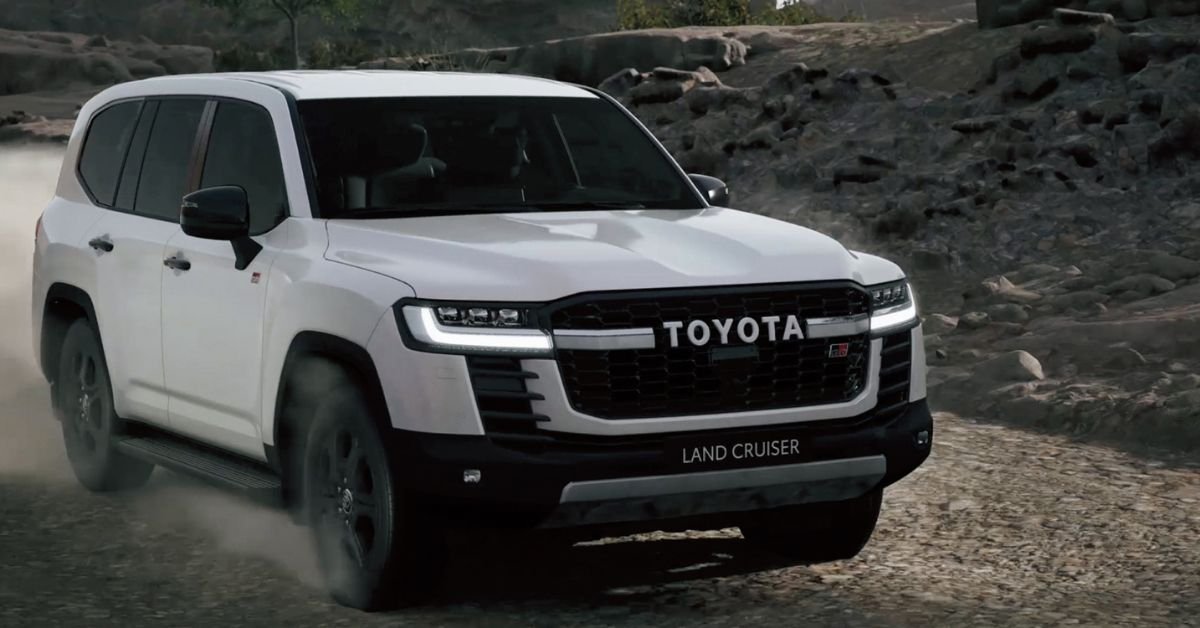

Toyota’s Land Cruiser family is evolving faster than anyone expected, and the latest rumblings from inside the company hint at something that could change the brand’s design map entirely. A monocoque-based, lifestyle-oriented Land Cruiser—internally treated as the production successor to the Land Cruiser Se Concept—is reportedly in development. If the whispers are right, this SUV won’t just be another rugged Toyota wagon; it’ll be the most urban-friendly Land Cruiser ever made, without abandoning the badge’s off-road DNA.
A New Direction for Land Cruiser
This shift shouldn’t come as a surprise. Toyota is expanding the Land Cruiser nameplate like never before. After the reveal of the Land Cruiser FJ last month—a compact, retro-inspired off-roader—the brand seems ready to go after the lifestyle SUV crowd next. And that’s where this monocoque-based model comes in.
Unlike traditional Land Cruisers built on body-on-frame platforms, this new SUV is expected to move to a monocoque chassis, blending comfort and agility with the toughness that Land Cruiser loyalists expect. Internally, the model is being referenced as the evolution of the Land Cruiser Se Concept, which made its splash at the Japan Mobility Show 2023.
If all stays on schedule, the production-ready version should land around 2028, sliding into the lineup as a more compact, stylish SUV compared to the full-size LC300 or even the LC250.
Dimensions and Design
The Land Cruiser Se concept was unmistakably different from anything the brand had showcased before. At 5,150 mm long, 1,990 mm wide, and 1,705 mm tall, it was longer and wider than the Prado but lower and more aerodynamic—almost Lexus-like in profile.

If Toyota retains even part of that silhouette, this upcoming SUV is going to stand out. Think clean edges, smooth body panels, a coupe-like roofline, and crisp lighting signatures. It signals a movement toward an SUV that appeals to city buyers who want something premium, tech-forward, and capable enough for the occasional trail rather than hardcore off-roading every weekend.
Multiple seating configurations appear likely—a three-row layout for family buyers globally and a two-row setup for performance or lifestyle markets where the extra space can be repurposed for cargo.
Platform & Powertrain
Toyota has been vocal about its multi-pathway approach to electrification. Instead of going all-in on BEVs like many rivals, the company is choosing hybrid, electric, and hydrogen development concurrently.
This new Land Cruiser derivative is reportedly being engineered on a flexible platform capable of supporting:

- BEV (Battery Electric Vehicle) powertrains
- HEV (Hybrid Electric Vehicle) powertrains
It will also come equipped with an advanced 4WD system using Toyota’s next-gen DIRECT4 technology, which dynamically distributes torque between the front and rear axles depending on traction needs. DIRECT4 made headlines with Lexus BEVs, and seeing it trickle down into the Land Cruiser family is a strong indicator of how premium Toyota wants this SUV to feel.
Expect smoother transitions, sharper cornering behavior, and a more planted high-speed ride—traits not commonly associated with traditional big Land Cruisers.
Software-Defined Vehicle (SDV)
Perhaps the most futuristic component of this SUV is Toyota’s ongoing shift toward Software Defined Vehicles, where vehicle features and behaviors evolve via software—not mechanical upgrades.
This model will reportedly run Toyota’s upcoming Arene software platform, enabling:

- Full OTA (Over-The-Air) updates
- Advanced driver-assistance behaviors
- Predictive maintenance
- Dynamic energy management
- Potential subscription-based features (something Toyota is clearly moving toward)
It’s the kind of architecture that turns a car into a long-term digital product—one that keeps improving years after purchase.
A Smaller Land Cruiser Also in the Works
Parallel to this project, Toyota is also developing another compact Land Cruiser—the Land Cruiser FJ—expected as early as February 2026. That model will lean more heavily into retro design and off-road capability, while the new monocoque Se-based SUV will cater to lifestyle and daily usability.
Together, they’ll broaden Toyota’s reach into two hot-selling segments: rugged 4x4s and urban adventure SUVs.
A Potential Thar–Jimny Rival on the Global Stage
This new monocoque SUV could carve out a fresh space in the midsize segment. Reports indicate that Toyota may design a version around 4.4 metres in length, placing it directly in competition with:

- Mahindra Thar Roxx (global aspirations considered)
- Suzuki Jimny (especially in export markets)
- Ford Bronco Sport (select markets)
But unlike these ladder-frame off-roaders, the Toyota will aim to mix:
- Better daily comfort
- Improved city drivability
- Monocoque precision
- Hybrid/electric efficiency
- Moderate but credible off-road capability
That blend could appeal to a wider range of customers—especially in Southeast Asia, Europe, and Africa—who want a tough-looking SUV without the heavy-duty ride compromises.
What This Means for Toyota’s Global Strategy
Toyota seems keen on expanding the Land Cruiser name as a family, not a single flagship. This monocoque model taps into two emerging trends:
- Lifestyle SUVs with luxury leanings
- Urban-ready off-road-inspired models
Pair that with electrification and next-gen software, and Toyota is trying to ensure the Land Cruiser badge stays relevant for buyers who might otherwise drift toward premium EV crossovers.
It’s the same playbook that Ford used with the Bronco family and Jeep with its ever-growing Wrangler/Compass/Recon lineup build an ecosystem, not a single hero product.
