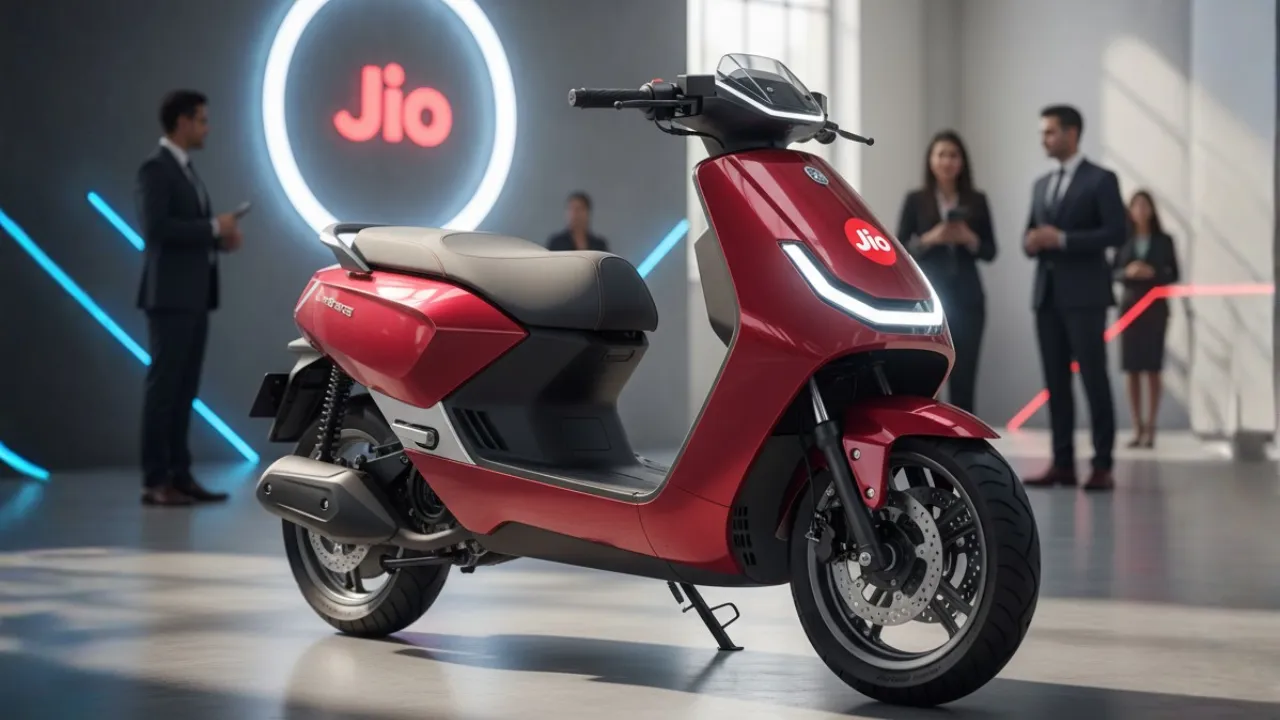

The Jio Electric Scooter 2026 is shaping up to be much more than just another addition to India’s electric vehicle scene it’s Reliance Jio’s bold entry into the personal mobility race, and it’s got ambition written all over it. Priced to disrupt and packed with features to attract the tech-first, budget-conscious Indian commuter, this two-wheeler could become the smartphone of EV scooters: ubiquitous, affordable, and smartly designed.
With fuel prices showing no signs of mercy and Indian cities choking under traffic and emissions, the timing couldn’t be better.
A Compact Head-Turner with Purpose
From a distance, the 2026 Jio Electric Scooter already looks dialed in for modern India — slim, aerodynamic lines, aggressive LED lighting, and just enough futuristic flair to stand out at a traffic signal. But the real win here is function wrapped in form.
The smartly integrated battery pack tucked into the underfloor chassis keeps weight low and the center of gravity balanced. This also allows for flat footboards and better storage — a big plus for daily riders. With vibrant color options, Jio clearly has its eyes on younger, urban riders who want more than just a ride — they want a statement.
Key exterior features:
- Full-LED lighting setup
- Integrated daytime running lights
- Retractable footrests
- Durable outer cladding for protection in tight traffic
- Side stand and center stand combo for versatility
Powertrain
Let’s not expect hyperbike performance here — the Jio Electric Scooter plays in the commuter category. But within that space, it ticks the right boxes.
Powered by a compact but torquey hub motor, the scooter promises instant acceleration, crucial for getting ahead at stoplights or navigating crowded junctions. The motor reportedly supports multiple riding modes, letting riders toggle between Eco, Normal, and Power, depending on their battery levels or urgency.

| Motor Output (Est.) | 2.5–3.5 kW (peak) |
|---|---|
| Torque | Instant-on electric torque |
| Top Speed | ~60–75 km/h (ideal for city use) |
| Ride Modes | Eco / Normal / Power |
| Transmission | Automatic (Direct Drive) |
This isn’t a highway scooter, and that’s by design — it’s optimized for city hops, not highway blasts.
Battery & Charging
The Jio Scooter is expected to come with a lithium-ion battery pack, likely in the 2.5–3.0 kWh range, offering a real-world range of 80–100 km per charge — enough for most urban commuters to last 2–3 days between plug-ins.
Charging is flexible:
- Home charging (standard 5A socket) – ~4-5 hours
- Fast charging (optional) – ~1.5–2 hours to 80%
- Removable battery (select models) – Adds major convenience
Optional swappable battery support or Jio-battery stations could become part of the ecosystem if Reliance decides to scale this with their telecom network — something worth watching.
| Battery Type | Lithium-Ion |
|---|---|
| Range (Est.) | 80–100 km |
| Charging Time | 4–5 hours (standard), ~2 hours (fast) |
| Charging Port | At-home compatible + Jio charging network (rumored) |
| Battery Options | Fixed / Removable (market dependent) |
Comfort & Ride Quality
City streets in India can go from smooth flyovers to cratered chaos in seconds. Jio seems to get that.
The scooter rides on a telescopic front suspension and a dual-shock rear setup, tuned for comfort over potholes and speed bumps. A low seat height, wide handlebars, and light curb weight make it very beginner-friendly.

With front disc brakes and combined braking system (CBS), safety’s built-in, even if you’ve never ridden before. Expect 12-inch alloy wheels, tubeless tires, and a stable stance that balances agility with road grip.
Smart Features & Connectivity
This is where Jio flexes its muscles.
The scooter features a digital dashboard, likely with a color TFT screen on higher variants, displaying:
- Speed
- Battery %
- Remaining range
- Real-time efficiency
- Ride mode status
Top trims are expected to offer smartphone integration via Jio’s app, allowing riders to:
- Track rides
- Locate scooter
- Check battery health
- Push software updates (OTA)
- Use turn-by-turn navigation
Other standout tech:
- Regenerative braking
- Anti-theft alert system
- Geo-fencing for fleet models
- AI-powered ride suggestions (coming soon, via Jio network)
| Smart Features | Details |
|---|---|
| Digital Cluster | TFT or LCD, depending on variant |
| App Connectivity | Jio App: Ride history, location, battery data |
| Safety Tech | Anti-theft alerts, regenerative braking |
| Lighting | Intelligent LED + auto-off system |
| Updates | Over-the-Air (OTA) ready |
Sustainability & Policy Push
Jio’s entry into EVs isn’t just about selling scooters — it’s about shaping the future of urban transport in India. With the government pushing incentives through the FAME II scheme, state-level subsidies, and lower GST on EVs (5%), this scooter becomes even more accessible.

If Reliance scales the infrastructure — charging points at JioMart locations, for instance — this could become a mass adoption platform, not just a niche product.
Expected Pricing & Market Outlook
With aggressive pricing expected in true Jio fashion, here’s where the scooter might land:
| Variant | Estimated Price (Ex-Showroom) |
|---|---|
| Jio Electric Scooter Base | ₹85,000 – ₹95,000 |
| Jio Electric Scooter Plus | ₹1.05 – ₹1.15 lakh |
| Jio Electric Scooter Pro (Smart) | ₹1.25 – ₹1.35 lakh |
This puts it squarely against players like:
- Ola S1 Air
- TVS iQube
- Ather 450S
- Bajaj Chetak Urbane
And knowing Reliance’s scale, they might just undercut the competition on launch pricing — or throw in JioFiber bundles, insurance, or EMIs with JioBank tie-ups to sweeten the deal.
The 2026 Jio Electric Scooter is more than a product—it’s a strategy, a statement, and maybe even a revolution in how India thinks about mobility.
With a clean design, smart features, and the might of Reliance behind it, this EV stands a real chance at mass adoption — especially if pricing remains aggressive and infrastructure support expands. For the average Indian commuter, this might just be the most sensible and stylish switch away from petrol yet.

And if Reliance applies its telecom playbook offer more, charge less, scale fast the rest of the market better be ready for a storm.
FAQs
It’s expected to hit the Indian market by mid-to-late 2026, with pilot rollouts in major cities earlier in the year.
Estimated real-world range is 80 to 100 km, depending on speed, terrain, and ride mode.
Yes, select variants will support fast charging, achieving 80% in around 1.5–2 hours.
Absolutely. The scooter supports standard home charging using a regular 5A socket.
Yes. The scooter is expected to qualify under FAME II and other state EV policies, reducing upfront costs.
