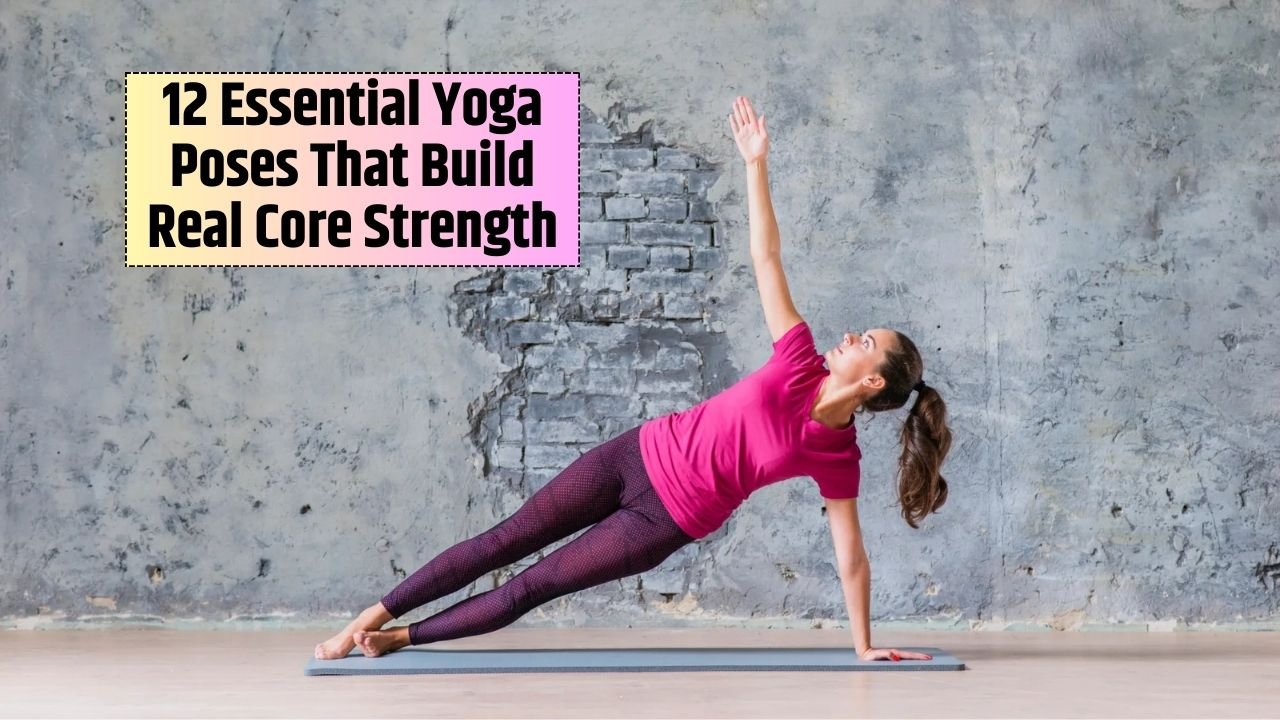

it’s about functional strength that holds you up, stabilizes you, and helps you move through life with less strain and more ease. Yoga is one of the most underrated ways to build that kind of strength. While gym workouts often hammer the surface-level muscles (hello, crunches), yoga dives deep into your transverse abdominis, obliques, spinal stabilizers, and pelvic floor—the unsung heroes of good posture, back health, and injury-free movement.
So if you’re looking to move better, stand taller, and feel stronger from the inside out, this guide is your blueprint. Let’s dig into the most effective yoga poses for core strength, plus expert tips to help you feel the burn—in the best way.
12 Yoga Poses That Strengthen Your Core from Every Angle
1. Balancing Table Pose (Dandayamana Bharmanasana)
Level: Beginner
Why it Works: This simple Bird Dog variation builds stability by engaging both front and back core muscles.
Tip: Keep your hips level—don’t let one side sag. Try drawing your navel in as if tightening a corset.
| Cue | Description |
|---|---|
| Starting Position | Hands-and-knees tabletop |
| Movement | Extend opposite arm and leg |
| Duration | 3–5 breaths per side |
| Challenge | Tap elbow to knee underneath, then re-extend |
2. Plank Pose (Phalakasana)
Level: Beginner
Why it Works: The gold standard for total core activation.
Tip: Think of pressing the floor away with your hands while keeping your hips from sagging.
| Cue | Description |
|---|---|
| Form Check | Straight line from head to heels |
| Hold Time | Start with 30 seconds, work up to 1 minute |
| Challenge | Shift weight forward and back on toes |
3. One-Legged Plank (Eka Pada Phalakasana)
Level: Intermediate
Why it Works: Adds instability, which fires up the deep core.
Tip: Don’t lift the leg too high—just enough to destabilize the base.
| Cue | Description |
|---|---|
| Movement | Lift one foot 6–8 inches |
| Duration | 3–5 breaths per side |
| Challenge | Tap knee to elbow, then extend again |
4. Side Plank (Vasisthasana)
Level: Intermediate
Why it Works: One of the best moves for sculpting strong obliques.
Tip: Stack shoulders and hips to avoid collapsing into the lower side.
| Cue | Description |
|---|---|
| Base | Balance on outer edge of foot and hand |
| Duration | 3–5 breaths per side |
| Challenge | Lift top leg or pulse it slightly |
5. Forearm Plank
Level: Beginner
Why it Works: Shifts more load into the abs than traditional Plank.
Tip: Keep your belly firm and your lower back from arching.
| Cue | Description |
|---|---|
| Forearm Placement | Elbows under shoulders |
| Duration | 30–60 seconds |
| Challenge | Rock gently forward and back on toes |
6. Dolphin Pose (Ardha Pincha Mayurasana)
Level: Intermediate
Why it Works: Boosts shoulder stability while engaging your core and back.
Tip: Keep your shoulders broad and lift through the hips.
| Cue | Description |
|---|---|
| Movement | Walk feet closer to elbows from Forearm Plank |
| Duration | 5 breaths |
| Challenge | Move between Dolphin and Forearm Plank slowly |
7. Boat Pose (Navasana)
Level: Beginner
Why it Works: Core muscles work hard to hold your torso up against gravity.
Tip: Keep your spine long—avoid collapsing into the lower back.
| Cue | Description |
|---|---|
| Starting | Sit with knees bent, feet on floor |
| Movement | Lift feet + extend arms forward |
| Challenge | Alternate between Boat and Low Boat with control |
8. Low Cobra (Bhujangasana)
Level: Beginner
Why it Works: Strengthens your back core—essential for balance and posture.
Tip: Engage your back to lift, not your hands. Keep elbows hugged in.
| Cue | Description |
|---|---|
| Position | Lie on stomach, hands under shoulders |
| Action | Lift chest using only back muscles |
| Challenge | Hold longer or do multiple slow reps |
9. Bridge Pose (Setu Bandhasana)
Level: Beginner
Why it Works: Targets your glutes, hamstrings, and deep spinal stabilizers.
Tip: Keep your knees from splaying out. Activate inner thighs slightly.
| Cue | Description |
|---|---|
| Position | Feet hip-width, heels close to glutes |
| Action | Lift hips using glutes, tuck shoulders |
| Challenge | Pulse the hips or hold with one leg lifted |
10. Chair Pose (Utkatasana)
Level: Beginner
Why it Works: A deep squat that forces core and lower body to work together.
Tip: Keep weight in your heels and lift your chest.
| Cue | Description |
|---|---|
| Position | Bend knees, raise arms overhead |
| Hold Time | 5–8 breaths |
| Challenge | Lower seat closer to floor, stay longer |
11. High Lunge
Level: Intermediate
Why it Works: Requires core control to maintain balance and upright posture.
Tip: Square your hips and draw your lower belly inward.
| Cue | Description |
|---|---|
| Step | One foot forward, one foot back |
| Arms | Raised overhead |
| Challenge | Hover back knee just above floor and pulse |
12. Half Moon Pose (Ardha Chandrasana)
Level: Intermediate
Why it Works: Builds lateral core strength, balance, and coordination.
Tip: Flex the lifted foot and keep the spine extended.
| Cue | Description |
|---|---|
| Balance | On one leg and opposite hand |
| Gaze | Up toward lifted hand or down for balance |
| Challenge | Hover bottom hand off the floor briefly |
Tips on Activating Your Deep Core
1. Draw Your Navel Inward
Every pose gets better when you gently pull your belly in toward your spine. Not a suck-in—just a light engagement.
2. Lift Your Pelvic Floor (Mula Bandha)
Think of it as a subtle upward pull inside your lower pelvis. It supports your entire torso and protects your lower back.
3. Use Your Back Core
Core isn’t just abs—your spinal muscles matter. In poses like Cobra or Bridge, keep your back engaged, not passive.
4. Breathe Into Your Belly
Breath supports core engagement. Try deep, controlled breaths through your nose in each pose. Exhales often help deepen core activation.
Why Yoga for Core Strength Pays Off
| Benefit | What It Improves |
|---|---|
| Posture | Reduces slouching, supports healthy alignment |
| Balance & Coordination | Especially important as you age or recover from injury |
| Back Health | Strengthens deep stabilizers and reduces pain |
| Body Awareness | You’ll feel more in control of how you move |
| Advancement in Yoga | Poses like Crow, Handstand, and Wheel all rely on core power |
How Often Should You Practice Core-Strength Yoga?
You don’t need to do an hour every day. Just 20–30 minutes, 3 times a week is enough to build strength if you stay consistent. Want faster results? Add short core flows to your warm-up or cool-down.
Try this schedule:
| Day | Practice Suggestion |
|---|---|
| Mon | 15-min Core Flow + Plank Series |
| Wed | Vinyasa Class w/ Core Focus |
| Fri | Boat Pose drills + Side Plank variations |
Common Mistakes to Avoid
- Overarching the Lower Back: In poses like Plank and Cobra, engage your abs to protect your spine.
- Holding Your Breath: Always breathe steadily, especially during effort.
- Checking Out Mentally: Keep bringing your attention back to your core—it’s easy to “coast” through poses.
- Relying on Momentum: Core strength builds slowly. Move with control, not speed.
Strengthening your core with yoga isn’t about chasing a six-pack—it’s about building the kind of deep, functional strength that supports your posture, protects your spine, and powers your everyday movement. With these 12 poses and a little consistency, you’ll notice the difference not just on your mat, but in how you walk, sit, stand, and carry yourself in daily life.
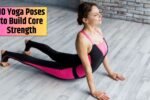
Engage the breath, move with intention, and let your core become your strongest support system.
FAQs
Yes. Especially with poses that challenge balance and spinal alignment—yoga strengthens deep abdominal and back muscles effectively.
3 times per week is a great starting point. You can increase frequency as you build endurance.
Not at all. Start with beginner-friendly poses like Tabletop and Boat Pose, and build from there.
For functional strength and long-term results yes. Yoga engages multiple core muscles in integrated movements, unlike isolated crunches.
Plank Pose is a solid starting point. It’s simple, effective, and builds full-body awareness.
