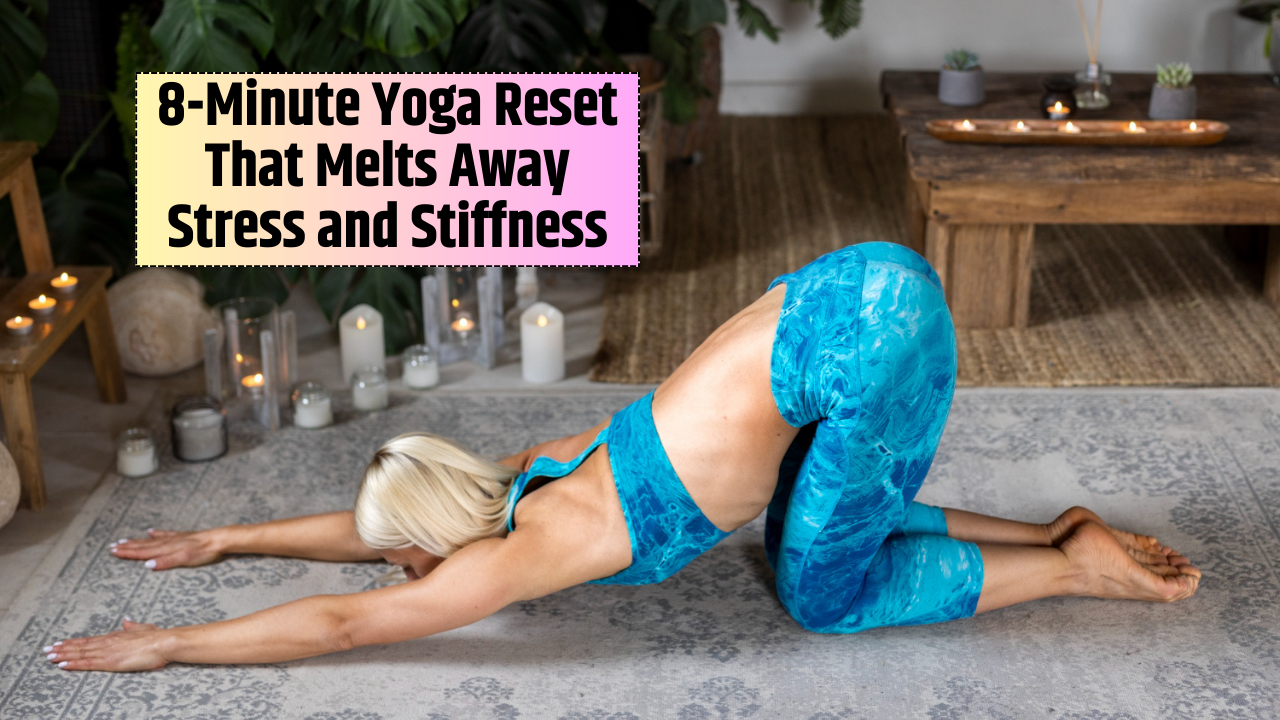

Modern life really does a number on both the body and the mind. Between marathon screen time, endless deadlines, and the general rush of “getting things done,” most of us live in a constant low-grade stress loop. Shoulders creep up toward the ears, hips tighten from sitting too long, and our backs carry the weight of everything—literally and figuratively. The result? A body that feels heavy and a mind that never really switches off. But here’s the surprising part—you don’t need a 60-minute yoga session to fix it. Just eight intentional minutes of gentle movement and breathing can bring you back to center.
This short daily yoga stretch isn’t about flexibility or fitness—it’s about relief. It’s slow, restorative, and designed for real life: a quick morning reset before work, a midday break to unstick your spine, or a pre-bed ritual to shake off the day’s tension.
Why Short Yoga Stretches Work So Well
When you move slowly and breathe deeply, you’re basically sending a memo to your nervous system that says, “Hey, we’re safe now.” Even a few minutes of mindful movement flips the body from fight-or-flight mode into relaxation. Muscles soften, the heart rate steadies, and blood flow improves. Plus, short routines are easier to stick with. It’s not about doing a lot once—it’s about doing a little often.
Minute 0–1: Seated Breathing Reset
Sit comfortably on a chair, cushion, or even your bed. Close your eyes, place a hand on your belly, and inhale through your nose, letting the belly rise. Exhale slowly, softening your shoulders. This minute isn’t just about breathing—it’s a signal to your body that you’re slowing down.
Minute 1–2: Neck and Shoulder Release
Tilt your head gently from side to side. Roll the shoulders up toward the ears, then let them drop on an exhale. These small movements release the “tech-neck” tension most of us carry. You’ll be amazed how quickly your upper body feels lighter.
Minute 2–3: Forward Fold
Whether standing or seated, fold forward slowly and let your head hang heavy. If you’re standing, bend your knees slightly. This simple inversion calms the mind and decompresses the spine—perfect for when you’re mentally overloaded.
Minute 3–4: Cat–Cow Stretch
On your hands and knees, inhale to arch your back (chest forward, gaze up), then exhale to round the spine (chin to chest). If you’re at a desk, you can mimic this seated. This rhythmic motion relieves stiffness in the spine and connects movement with breath—a mini massage for your back.
Minute 4–5: Low Lunge or Hip Opener
Step one foot back into a gentle low lunge. Keep the front knee over the ankle, chest lifted. Hips store emotional tension—this stretch helps release that tightness. Switch sides halfway through. You’ll notice the difference almost instantly, especially if you sit for long periods.
Minute 5–6: Seated Twist
Sit tall, place one hand behind you, and gently twist to the opposite side. Breathe into the twist, lengthening the spine. Switch sides after a few breaths. Twists are like wringing out stress—you feel refreshed and a little lighter afterward.

Minute 6–7: Child’s Pose or Resting Fold
Lower into child’s pose or fold forward over your legs. Let your arms and face relax. This posture soothes the nervous system and invites stillness. If you’ve been running on adrenaline, this is where your body finally exhales.
Minute 7–8: Final Rest and Breath Awareness
Lie down or sit comfortably with eyes closed. Inhale for four counts, exhale for six. Longer exhales tell the body it’s safe to let go. Feel your body get heavier, the breath smoother, the mind quieter. This final minute seals the practice like a reset button for your entire system.
Why This Routine Helps the Mind as Much as the Body
Stress doesn’t just live in the head—it hides in the muscles. So when the body relaxes, the mind naturally follows. This short sequence lowers cortisol, boosts focus, and improves emotional balance. People who practice it regularly often report better mood and sharper clarity, even on chaotic days.
How to Use This Routine Daily
Think of it like brushing your teeth—something small you do daily to keep things from building up. Morning sessions help you start grounded, midday ones refresh focus, and evening stretches prep you for sleep. You can even break it into mini sessions—just two or three minutes when you feel tight or tired.

Common Mistakes to Avoid
Don’t rush. These movements aren’t meant to be “done fast.” The slower you move, the more your body responds. Avoid pushing into pain—comfort always wins over intensity. Props like cushions, walls, or even your office chair are perfectly fine.
Long-Term Benefits of a Daily Reset
Stick with it and your body starts to remember what ease feels like. Posture improves, tension melts faster, and your energy stays more stable through the day. You’ll also notice fewer random aches and a better night’s sleep. Over time, these eight minutes can genuinely shift how your body handles stress.
You don’t need hours in a yoga studio to feel better. You just need a few mindful minutes each day. This 8-minute tension relief stretch is realistic, restorative, and surprisingly powerful. A daily pause to breathe, move, and reset because sometimes, the smallest routines make the biggest difference.
FAQs
Yes. Even short, mindful movement can lower stress hormones and release muscle tightness.

Absolutely. Every pose is gentle and easy to modify.
No, you can do it on a rug, bed, or even sitting in a chair.
Yes. Many poses like neck rolls, twists, and breathing are desk-friendly.
No. The goal is release and calm, not workout soreness.
Yes, gentle yoga can be practiced safely every day.
