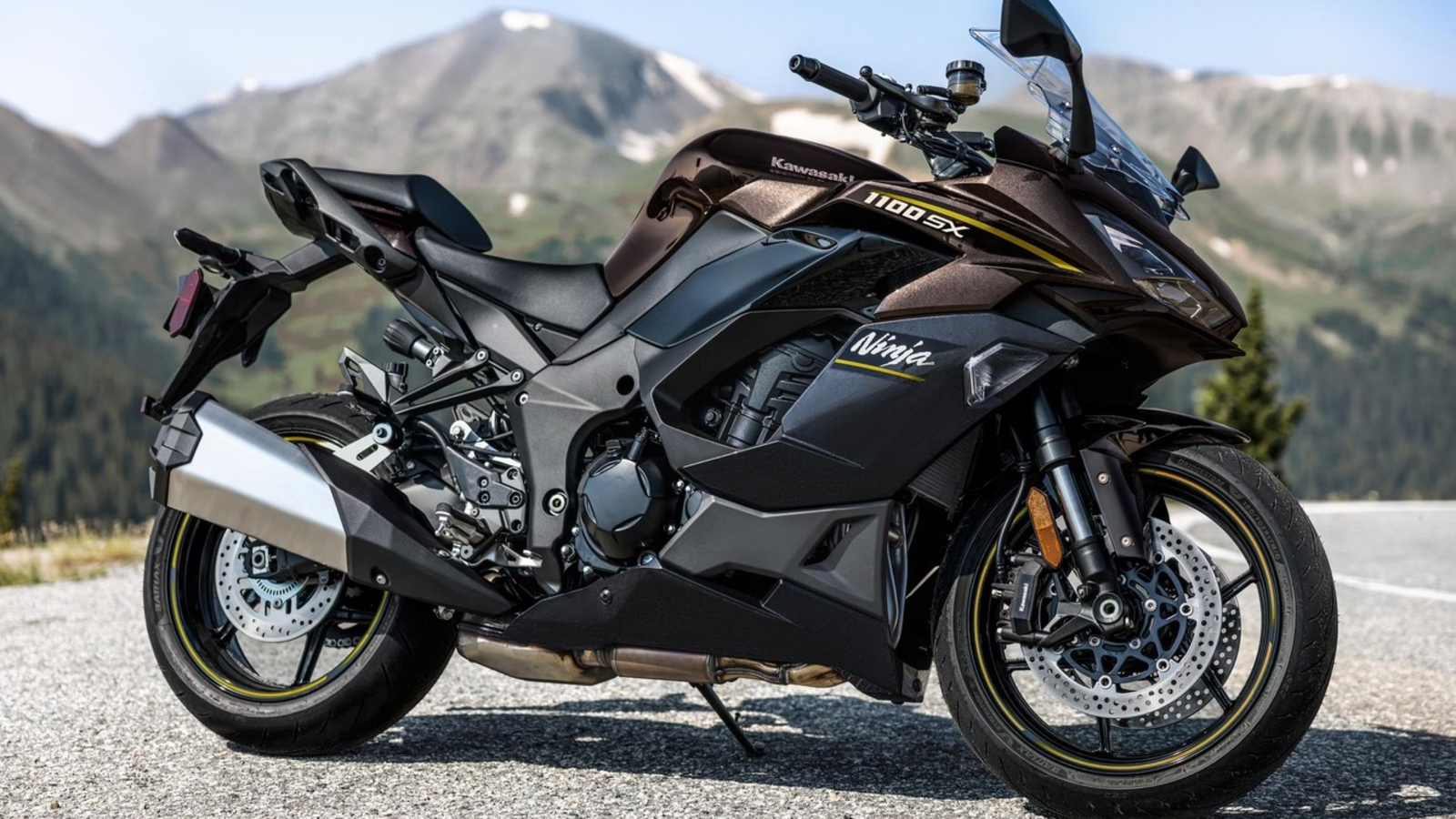

Kawasaki has officially rolled out the 2025 Ninja 125, and while it might be the smallest sibling in the Ninja sportbike family, it carries the name with serious intent. Compact, sharp, and now more refined than ever, the Ninja 125 is aimed squarely at new riders and young enthusiasts who want to dip their toes into the world of sportbikes without diving headfirst into the deep end.
This latest refresh doesn’t scream revolution but it doesn’t need to. Kawasaki has taken a proven entry-level platform and polished it up with modern touches, sharper styling, and a level of refinement that makes it more usable, more fun, and frankly, more desirable than ever.
A Ninja That Looks the Part
Don’t let the 125 badge fool you. One look at the 2025 Ninja 125 and you’ll know—it’s every bit a Ninja.
The full fairing, aggressive front fascia, and sleek tail section pull direct inspiration from its bigger siblings like the Ninja 400 and ZX-6R. Updated graphics and bodywork tweaks give it a fresher, more angular stance, with dual LED headlights now standard, offering better visibility and a more premium face.
| Styling Highlights | Description |
|---|---|
| Bodywork | Full fairing with sharp lines |
| Headlights | LED dual-beam units |
| Paint Options | Lime Green, Metallic Spark Black, White |
| Display | All-digital LCD cluster |
| Exhaust | Underslung, sport-style |
At a glance, it’s tough to tell this is an entry-level bike—which is kind of the point.
Engine
The heart of the Ninja 125 is a 124cc, single-cylinder, liquid-cooled, DOHC engine, delivering around 15 PS of peak power. That puts it right at the A1 license limit in Europe, and within the ideal range for beginner riders.

Throttle response is linear and predictable, not punchy or intimidating. The 6-speed gearbox has close ratios to make the most of the available power, especially helpful when navigating city traffic or learning how to shift efficiently.
| Engine Specs | Details |
|---|---|
| Engine Type | 124cc, liquid-cooled, 4-stroke, DOHC |
| Max Power | ~15 PS @ 10,000 rpm |
| Max Torque | ~11.7 Nm @ 7,700 rpm |
| Transmission | 6-speed manual |
| Top Speed (est.) | ~110–115 km/h |
| Mileage (claimed) | ~40–45 km/l |
It’s not designed to set speed records, but for a beginner, it’s engaging without being overwhelming, and that’s exactly where it should be.
Handling and Ride
Weighing in at around 148 kg (kerb), the 2025 Ninja 125 feels nimble and flickable. It’s perfect for learners navigating through tight urban traffic, parking in cramped spots, or building confidence on twisty roads.
The trellis frame, inspired by Kawasaki’s bigger models, helps provide excellent rigidity and handling balance. Add to that a 37mm front telescopic fork and preload-adjustable rear monoshock, and you’ve got a setup that absorbs bumps without sacrificing sportiness.
Braking duties are handled by a 290mm front disc and 220mm rear disc, with dual-channel ABS now standard—a welcome upgrade for beginners who might panic-brake now and then.

| Handling Components | Specification |
|---|---|
| Front Suspension | 37mm Telescopic Fork |
| Rear Suspension | Uni-Trak Monoshock (Preload Adjustable) |
| Front Brake | 290mm Disc with ABS |
| Rear Brake | 220mm Disc with ABS |
| Tyres | 100/80 front, 130/70 rear (17-inch alloys) |
| Seat Height | 785 mm |
Feature Updates
While the 2025 Ninja 125 keeps things relatively simple, it’s not without tech:
- All-digital LCD console: Displays speed, RPM, gear position, fuel level, and trip info.
- LED lighting: For improved night visibility and better energy efficiency.
- Ergonomics: Slightly forward-leaning posture, but not overly aggressive—comfortable for daily commuting and weekend rides.
- Side stand engine cut-off and pass-light switch included as standard.
Bluetooth or smartphone integration isn’t here, but that’s arguably a good call at this price point—less distraction, more focus on riding.
Who’s It For?
The 2025 Ninja 125 is clearly targeted at newer riders, but that doesn’t mean it’s just for teenagers. It also fits:
- Riders upgrading from a scooter or 100–110cc commuter
- Returning riders after a long break who want something lightweight and confidence-inspiring
- Riders looking for a second bike for city duties or shorter weekend blasts
- Those who want premium brand presence (Ninja badge) without high upfront cost
It’s A1-license friendly (for Europe) and easy on the pocket in markets like Asia, where lightweight sportbikes are growing in popularity.
How It Compares in the Segment
The entry-level sportbike class is packed, and while the Ninja 125 doesn’t blow everyone away with raw numbers, it wins on refinement, brand trust, and genuine sportbike feel.

| Model | Engine | Power | ABS | Est. Price (INR) |
|---|---|---|---|---|
| Ninja 125 (2025) | 124cc, Liquid | ~15 PS | Dual | ₹1.45–1.60 lakh* |
| Yamaha R15 V4 | 155cc, VVA | 18.4 PS | Dual | ₹1.82 lakh |
| KTM RC 125 | 124cc, Liquid | 14.5 PS | Dual | ₹1.89 lakh |
| TVS Apache RTR 160 | 160cc, Air | 16 PS | Single | ₹1.24 lakh |
*Estimated Indian pricing if launched domestically; actual launch may be limited to Europe and select Asian markets.
The Ninja 125 undercuts both the R15 and RC 125 slightly in pricing and offers a more neutral riding posture for everyday use. It’s a solid pick for someone who wants the Ninja look without the Ninja 400 cost.
The 2025 Kawasaki Ninja 125 isn’t about shock and awe. It’s about balance—styling that inspires, performance that builds confidence, and quality that doesn’t feel entry-level. For anyone looking to begin their sportbike journey, this is a damn good place to start.
If you’ve always dreamed of owning a Ninja, this is your chance to enter the family without breaking the bank—or your back.
FAQs
Absolutely. With predictable power delivery, light weight, and forgiving handling, it’s ideal for new riders.

Yes, the 2025 Ninja 125 comes with dual-channel ABS as standard.
Expect a top speed of around 110–115 km/h, depending on rider weight and conditions.
Yes, for shorter highway stretches. It’s stable and smooth, though limited top-end means it’s best at 80–90 km/h cruising speeds.
As of now, it’s primarily targeted at European and select Southeast Asian markets. No official India launch confirmed yet.
