
You’re not alone modern life isn’t exactly designed with flexibility in mind. We spend hours at desks, behind wheels, or glued to screens, all of which shortens our muscles and messes with mobility. The good news? You don’t need to be a gymnast to feel looser, more mobile, and more at home in your body.
Yoga when practiced consistently and mindfully can work wonders in improving flexibility, releasing tension, and enhancing joint mobility. Whether you’re a total beginner or someone trying to touch your toes without wincing, these six essential poses will help you increase flexibility quickly and safely.
Let’s break them down — plus how to get the most out of your stretching sessions.
1. Downward-Facing Dog (Adho Mukha Svanasana)
This foundational pose is basically yoga’s version of a full-body reset. It targets everything — from your calves to your shoulders — while giving your spine space to decompress.
How to Do It:
- Start on all fours.
- Tuck your toes and lift your hips up and back.
- Form an inverted “V” shape.
- Hands shoulder-width apart, feet hip-width.
- Press your heels gently toward the floor.
What it stretches:
- Hamstrings
- Calves
- Shoulders
- Spine
Pro tip: Got tight legs? Keep a generous bend in your knees your goal is a long spine, not straight legs.
2. Seated Forward Bend (Paschimottanasana)
If you’re chasing hamstring flexibility (and let’s be honest, most of us are), this is the pose to do. But it’s not just about your legs — it also calms your nervous system and lengthens your entire back body.
How to Do It:
- Sit with your legs extended straight in front.
- Inhale to lengthen your spine.
- Exhale and hinge forward from your hips (not your back).
- Reach for your feet, ankles, or shins.
What it stretches:
- Hamstrings
- Calves
- Lower back
- Spine
Pro tip: Use a strap around your feet and slightly bend your knees if needed. Don’t yank — gravity will do the work over time.
3. Butterfly Pose (Baddha Konasana)
This pose targets the inner thighs and groin — areas that tend to tighten up if you sit a lot or run regularly. It’s simple, grounding, and surprisingly effective.
How to Do It:
- Sit with the soles of your feet touching.
- Let your knees fall out to the sides.
- Hold your feet with your hands and sit up tall.
- Gently press knees toward the floor.
What it stretches:
- Inner thighs
- Groin
- Hips
Pro tip: Sit on a folded blanket if your spine rounds or hips feel tight. You’ll get a deeper, more comfortable stretch.
4. Low Lunge (Anjaneyasana)
Hip flexors are notorious for shortening due to prolonged sitting — and tight hip flexors can throw off your entire lower body alignment. Low Lunge is the antidote.
How to Do It:
- From a kneeling position, step one foot forward.
- Back knee stays grounded.
- Square your hips and lift your arms overhead.
- Gently sink into the front hip.
What it stretches:
- Hip flexors
- Quads
- Hamstrings
- Groin
Pro tip: Use a folded towel or blanket under your back knee to protect it. Keep the front knee stacked over the ankle.
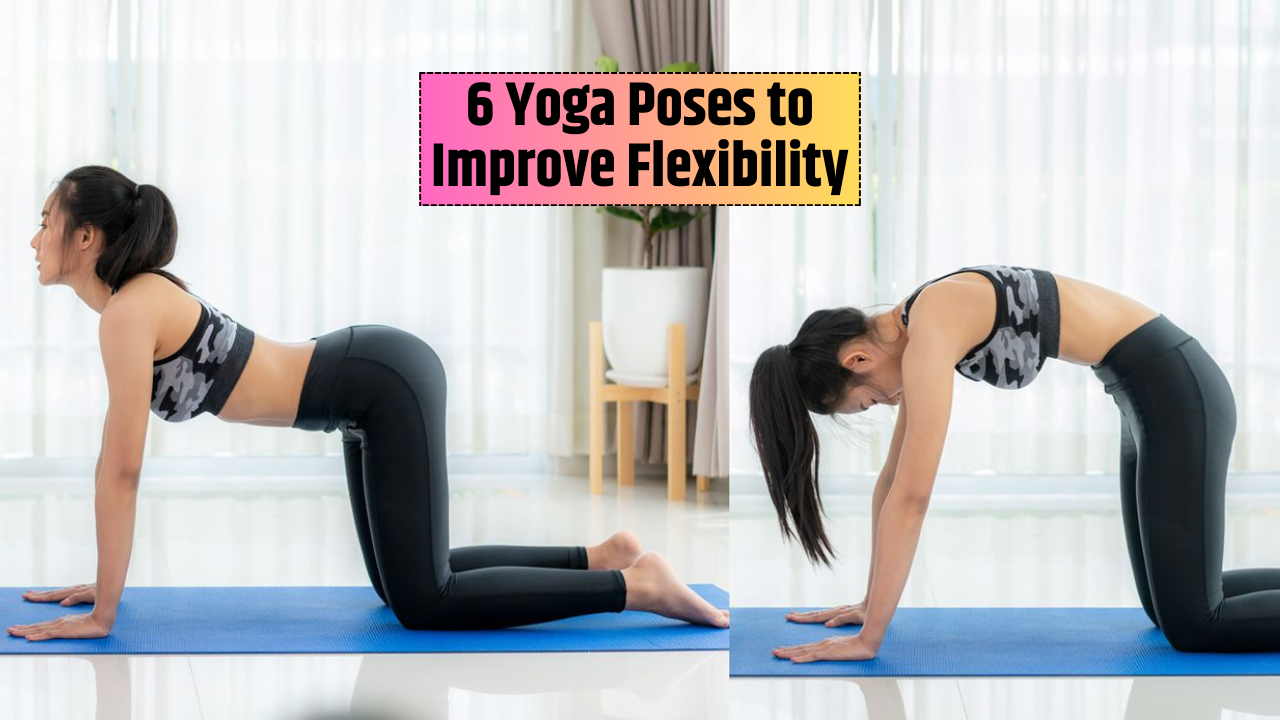
5. Cat-Cow Pose (Marjaryasana–Bitilasana)
This one might not look like a flexibility powerhouse — but trust me, it’s the warm-up you didn’t know you needed. The rhythmic spinal movement prepares your body for deeper stretching and opens up your back, neck, and shoulders.
How to Do It:
- Begin on hands and knees.
- Inhale, arch your back, lift your tailbone and chest (Cow).
- Exhale, round your spine and tuck your chin (Cat).
- Flow with your breath for 8–10 rounds.
What it stretches:
- Spine
- Neck
- Shoulders
- Core
Pro tip: Move slowly. Rushing defeats the purpose. Let each breath lead the movement.
6. Pigeon Pose (Eka Pada Rajakapotasana)
If you’ve ever felt like your hips are storing all your stress — you’re not wrong. Pigeon Pose dives deep into the glutes, hip rotators, and piriformis, releasing years of tension if practiced regularly.
How to Do It:
- From Downward Dog, bring one knee forward behind your wrists.
- Extend the back leg straight behind you.
- Keep hips square and either stay upright or fold forward.
What it stretches:
- Hips
- Glutes
- Piriformis
- Lower back
Pro tip: Use a block or cushion under the hip of your bent leg to prevent strain. Avoid forcing it — it’s a deep pose.
Flexibility Quick-Start Routine (20 Minutes)
| Pose | Duration |
|---|---|
| Cat-Cow Flow | 2–3 minutes |
| Downward-Facing Dog | 1 minute |
| Low Lunge (each side) | 1 minute per side |
| Seated Forward Bend | 2 minutes |
| Butterfly Pose | 2 minutes |
| Pigeon Pose (each side) | 2 minutes per side |
| Legs-Up-the-Wall (optional cooldown) | 3–5 minutes |
Repeat 3–5 times per week for best results.
Best Practices for Improving Flexibility with Yoga
1. Don’t Rush.
Flexibility takes time — pushing too hard, too fast can lead to injury.
2. Breathe Deeply.
Your breath is the key to relaxing into deeper stretches. Inhale into tight spots; exhale to release tension.
3. Use Props.
Blocks, straps, blankets — they’re not crutches, they’re tools for deeper, safer stretches.
4. Stay Consistent.
Daily short practices (15–30 minutes) are better than one long session per week.
5. Warm Up First.
Cold muscles are less elastic. Start with gentle movement (like Cat-Cow or Sun Salutations) before diving into deeper poses.

Stretch Beyond the Mat
Flexibility isn’t just about touching your toes — it’s about moving through life with more ease, fewer aches, and greater awareness of your body. These six poses are simple, accessible, and incredibly effective when practiced consistently. Whether you’re an athlete, a desk worker, or somewhere in between, yoga can help you open up, loosen up, and show up — feeling your best.
The key? Stick with it. Because flexibility, like most good things, doesn’t come overnight. But it does come.
FAQs
With consistent practice (3–5 times per week), you may notice improvements in 2–4 weeks. Everyone’s body responds differently.
Absolutely. These are beginner-friendly poses, and you can modify them as needed using props.
Anytime is fine, but your body tends to be more open in the afternoon or evening when muscles are naturally warmer.
No. Discomfort is normal, but pain is a red flag. Ease out or modify if something doesn’t feel right.
Yes, yoga can be a comprehensive flexibility practice with added benefits for your mind and nervous system.
