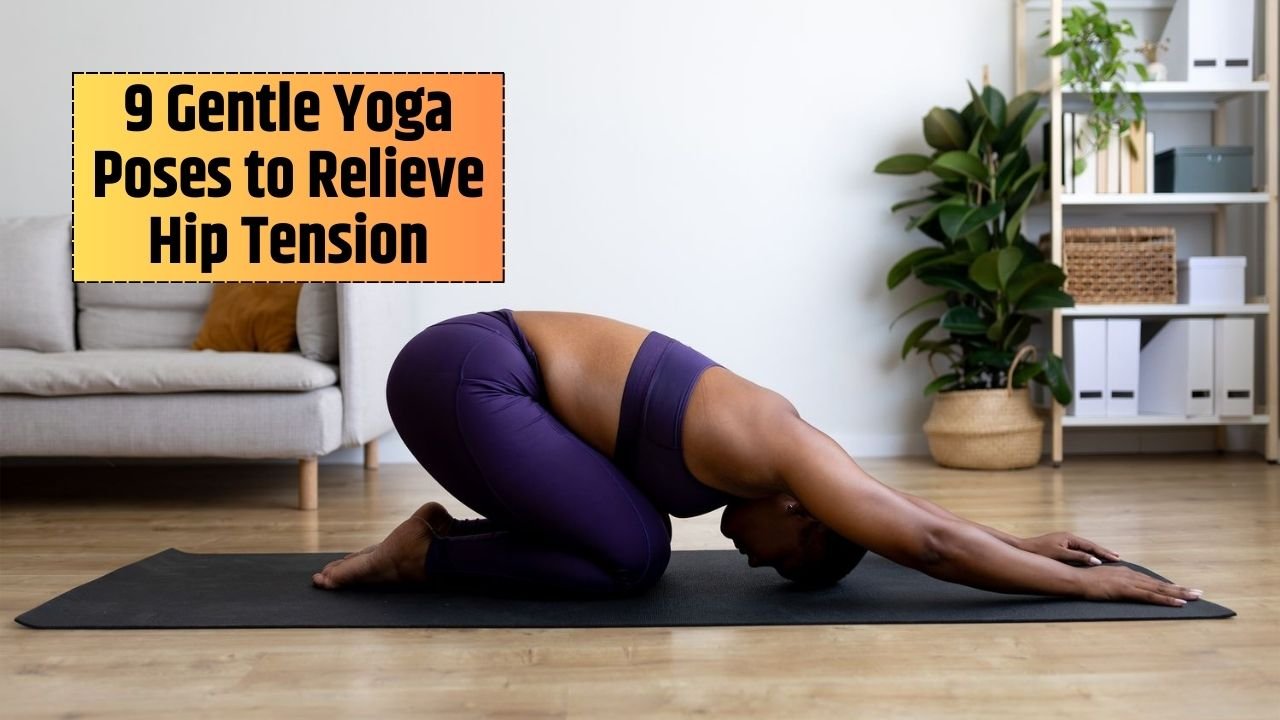

If your hips feel like they’ve been welded shut after a day at your desk or a long commute, you’re not alone. Hip stiffness is one of those sneaky issues starts with a little tightness, maybe some clicking here and there, and before you know it, your range of motion shrinks and your lower back starts picking up the slack. The culprit? Usually hours of sitting, aging joints, stress, or that same strength routine you’ve been repeating like Groundhog Day. The fix? You don’t need a fancy gym or high-impact routine. Just a yoga mat, some patience, and a few tried-and-true poses that invite not force your hips to open.
Let’s walk through nine gentle yoga poses that work like WD-40 for the hips—freeing up tension, restoring movement, and helping your body breathe a little easier again.
Butterfly Pose (Baddha Konasana)
Simple, but surprisingly powerful. Sit down, bring the soles of your feet together, and let your knees fall apart like opening a book. You’re not trying to jam your knees to the floor—just let gravity do its thing.
This pose targets the inner thighs and groin, areas that tighten up from sitting or cycling. Slow, deep breaths help the hips soften. Pro tip? Place cushions under your knees for support if they hover way above the ground. No medals for suffering here—comfort is key.
Low Lunge (Anjaneyasana)
If you sit a lot, your hip flexors are probably shorter than your attention span during a Zoom call. Low Lunge gives them the space to lengthen and breathe.
Step one foot forward, drop the back knee, and gently press the hips forward while keeping your chest tall. Feel that stretch at the front of the hip? That’s your psoas muscle saying “finally.” You can rest your hands on your thigh or raise them overhead to deepen the stretch and engage your core.
Bonus: This pose also strengthens your legs and helps realign your pelvis, reducing strain on your lower back.
Pigeon Pose (Eka Pada Rajakapotasana)
Tight glutes? Outer hip pain? This one’s for you. Pigeon Pose is a go-to for targeting deep hip tension—especially the piriformis muscle, which can irritate the sciatic nerve when it gets cranky.
Start in a tabletop position and slide one leg forward, angling the knee toward your opposite wrist. Extend the back leg straight behind you and fold forward over your front leg. Don’t force it. Use props, like a folded blanket under your hip, to make it more accessible.
This is an emotional one too—many people hold stress in their hips, and Pigeon tends to stir things up. Breathe through it.
Garland Pose (Malasana)
This deep squat is a functional powerhouse. It’s how many people around the world naturally rest—unlike our chair-happy culture.
Feet slightly turned out, squat down with your heels (hopefully) on the floor. Can’t get your heels down? No biggie—roll up a towel or yoga mat under them. Press your elbows into your inner knees and lift through the chest.
Malasana opens the hips, stretches the groin, and builds strength in your legs. It’s like a full lower-body reset, and it reminds your hips how to move the way they were designed to.
Seated Spinal Twist (Ardha Matsyendrasana)
Hips and spine are besties—when one’s tight, the other often compensates. Seated Spinal Twist helps both unwind.
Sit with your legs extended, then cross one leg over the other and twist toward the bent knee. The twist should feel like a gentle wringing out—not a forceful pretzel. Each inhale lengthens your spine, each exhale deepens the rotation.
This pose helps with mobility across the lumbar spine and hips, supports digestion, and even relieves tension stored from prolonged sitting.
Frog Pose (Bhekasana Variation)
This one looks a little awkward, not gonna lie—but it gets the job done. On your mat, spread your knees wide and bring your shins parallel to each other, flexing the feet. Gently lower down onto your forearms or a bolster.
Frog Pose targets the inner thighs and groin, and it can get intense, fast. Which is why it’s crucial to support your body with props and move into it slowly. The goal isn’t to push, it’s to surrender and let the hips open over time.
Bridge Pose (Setu Bandhasana)
Bridge works double duty: it opens up the front hips and strengthens the back body. That combo is golden for counteracting the effects of slouchy chairs and tight hip flexors.
Lie on your back, bend your knees, and place your feet hip-width apart. Press into your feet to lift your hips, engaging your glutes and hamstrings. Don’t over-arch—think long, not high.
You can place a block under your sacrum for a supported version that focuses more on release than strength.
Happy Baby Pose (Ananda Balasana)
This one’s just plain fun—and surprisingly effective for the hips.
Lie on your back and grab the outsides of your feet, drawing your knees toward your armpits. Let the tailbone stay grounded and gently rock side to side. This massages the lower back, loosens the hips, and brings a bit of playfulness into the mix.
Perfect for winding down at night or stretching out after a long drive or plane ride.
Reclining Bound Angle Pose (Supta Baddha Konasana)
The ultimate restorative pose. Reclining Bound Angle lets your hips melt open while your body fully relaxes.
Lie back, bring the soles of your feet together, and let your knees fall apart. Use pillows or blocks under your thighs for support—this isn’t a stretch you want to feel, it’s one you want to receive.
Ideal for deep relaxation, especially if you’re dealing with chronic tightness or want to soothe your nervous system after a stressful day.
Final Word
Here’s the deal—tight hips don’t unwind overnight. But with consistent, gentle practice, the layers of tension start to peel away. These nine yoga poses aren’t just stretches; they’re invitations for your body to move more naturally, breathe more fully, and feel more alive. Forget pushing or forcing—this is about tuning in, loosening up, and reclaiming the mobility that daily life tends to steal.
You don’t need to be flexible. You just need to start.
FAQs
Aim for 3–5 times a week, even if it’s just 10–15 minutes. Consistency matters more than duration.
Absolutely. Use cushions, yoga blocks, or rolled towels to support your body. Modify, don’t skip.
Not always. It can also come from lack of movement, repetitive strain (like running), emotional stress, or aging.
Start with 30–60 seconds. Restorative poses like Reclining Bound Angle can be held for several minutes.
In many cases, yes. Stretching and improving blood flow often relieve mild to moderate discomfort over time.
