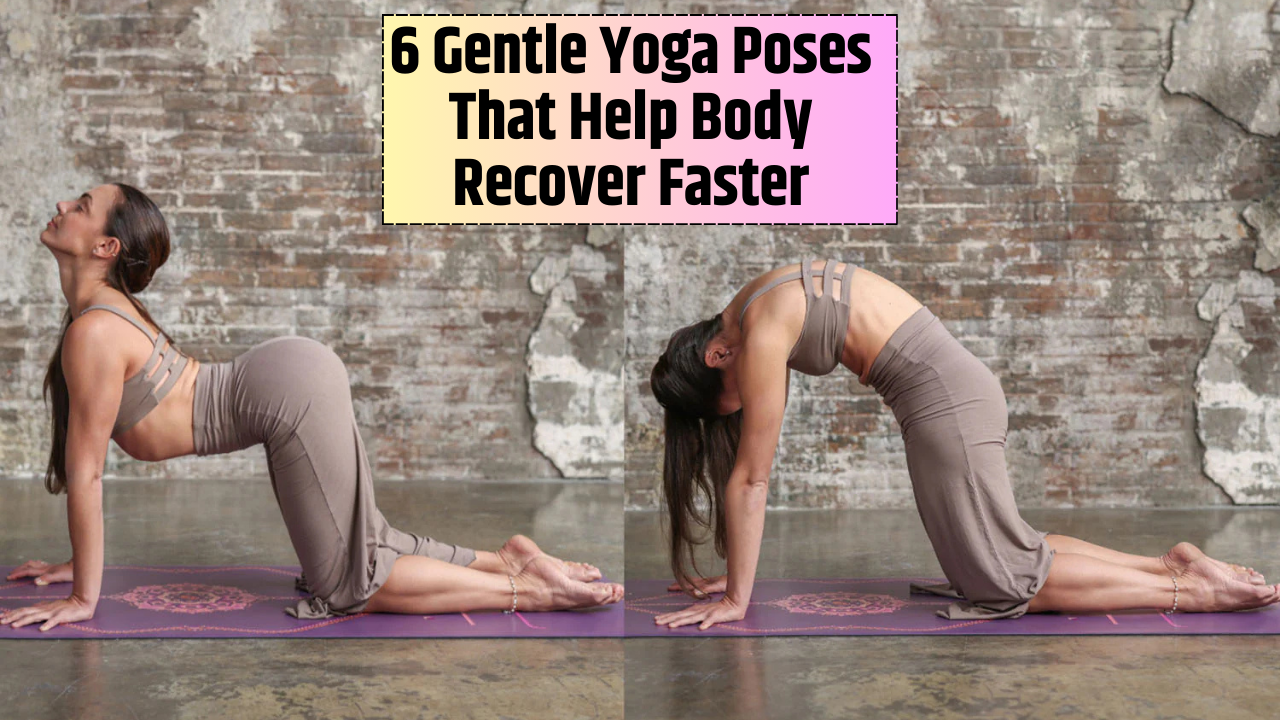

One day you’re powering through deadlines and workouts, and the next bam you’re dragging yourself out of bed, aching in places you didn’t know existed. Welcome to modern life: a cocktail of stress, speed, and sleepless nights. And while we glorify hustle, our bodies are quietly begging for rest, repair, and something most of us barely prioritize—recovery.
That’s where recovery yoga slips in. Not as a workout replacement, but as an essential piece of the puzzle. These six yoga poses aren’t about sweating or stretching to extremes. They’re about healing. Quietly, gently, deeply.
1. Child’s Pose (Balasana)
You know those moments when you just want to curl up and tune out the world? That’s exactly what Child’s Pose offers. It’s the body’s version of a deep sigh.
With knees folded under, arms stretched forward, and your forehead resting on the mat, this pose grounds you. It eases pressure in the spine, opens tight hips, and lets the shoulders soften. More importantly, it soothes the nervous system. That gentle pressure on the forehead? It taps into the vagus nerve—your body’s direct hotline to the relaxation response. Perfect after a brutal gym session or a marathon Zoom day.
2. Legs Up the Wall (Viparita Karani)
No sweat, no effort—just a wall and a few minutes of stillness. Legs Up the Wall is the ultimate low-investment, high-return posture.
It drains stagnant fluid from your feet and calves (especially helpful after long flights or standing shifts), and resets your circulation. Blood and lymph flow back toward your core, reducing swelling and fatigue. You might not feel like you’re doing much, but internally, your body is on full recovery mode—balancing hormones, improving venous return, and flushing out waste. It’s basically the lazy person’s ice bath.
3. Supine Figure Four Pose
Your hips carry the weight of your day—literally and emotionally. Sitting too long, squatting too deep, or just existing in modern life tends to lock up the glutes and piriformis muscles.
Enter Supine Figure Four: a floor-based hip opener that gently coaxes your body into release. It’s deceptively simple. You lie on your back, cross one ankle over the opposite knee, and thread your arms through to hold the leg. Gravity does the rest. This pose hits the sweet spot between effort and ease, melting tension in the lower body while keeping you supported.
4. Seated Forward Bend (Paschimottanasana)
Forward bends aren’t just about hamstrings. They’re about turning inward.
Seated Forward Bend encourages a full-body exhale. As you fold over your legs, your spine lengthens, your calves and hamstrings get a stretch, and your brain takes a step back from overdrive. It’s the physical equivalent of closing all your browser tabs. Even your digestive system gets a gentle massage.
If you’re someone who holds mental tension in your back or struggles to relax after a long day, this one’s gold.
5. Reclined Bound Angle Pose (Supta Baddha Konasana)
Let’s call this one the “yogic savasana plus.” You’re lying down, soles of the feet together, knees dropping open like butterfly wings. Arms spread wide. Zero resistance.
This pose creates space in the chest and hips—two areas where tension loves to park itself. And with the entire body supported, your breathing naturally slows down. That sends signals to your brain that you’re safe. Which, in nervous system language, means: time to repair.

Supta Baddha Konasana has also been linked to improved hormonal balance and better digestion. That’s recovery that goes way beyond muscles.
6. Supine Spinal Twist
You’ve probably done this instinctively—rolling onto your back, pulling one knee across the body. There’s something deeply satisfying about the crack or stretch that follows.
The Supine Spinal Twist releases tension in the lower back, hydrates spinal discs, and stimulates the abdominal organs. It’s also great for detoxification. Not in the buzzword sense, but in a real, physiological way—helping your body process waste and inflammation more efficiently.
Bonus: it feels ridiculously good after sitting all day or waking up sore.
How Yoga Supports Natural Recovery
Here’s the science: when you’re constantly stressed or physically pushing limits, your sympathetic nervous system—the fight-or-flight mode—is always running the show. That’s fine when you’re in survival mode. But for healing? You need the parasympathetic system to kick in. That’s the rest-and-digest mode, and yoga’s slow, rhythmic breathing is one of the fastest ways to activate it.
When you hold these recovery poses, you’re not just stretching muscles—you’re increasing circulation, boosting lymphatic drainage, calming the mind, and reducing cortisol (the stress hormone that delays tissue repair). This is why yoga complements everything from strength training to mental health therapy.
Even five to ten minutes daily can help reset your system, especially when life doesn’t offer much pause.
Recovery Is the Real Power Move
People often mistake rest for weakness. But here’s the truth: recovery is the multiplier of progress. Without it, you don’t grow stronger—you just burn out faster. These six yoga poses aren’t magic bullets, but they offer something that’s often missing from fitness plans: compassion for the body.
Recovery yoga doesn’t demand. It invites. It doesn’t push—it restores. And in a world that’s constantly asking more from you, that’s not just self-care—it’s strategy.
So roll out the mat, take a deep breath, and give your body what it’s really asking for. You’ll feel the difference—not just in your muscles, but in your mind.
FAQs
You can do recovery yoga daily, especially if you’re active or under a lot of stress. Even 10–15 minutes a day can make a big difference.
Absolutely. These six poses are beginner-friendly, low-impact, and can be easily modified with props like pillows or blocks.

Both. They’re great after workouts to help the body cool down and begin repair, and perfect for active recovery on rest days.
Aim for 1–5 minutes per pose, depending on comfort. The goal is relaxation, so never push into discomfort.
Yes. Gentle movement and increased circulation from recovery yoga can help flush out lactic acid and reduce delayed onset muscle soreness (DOMS).
