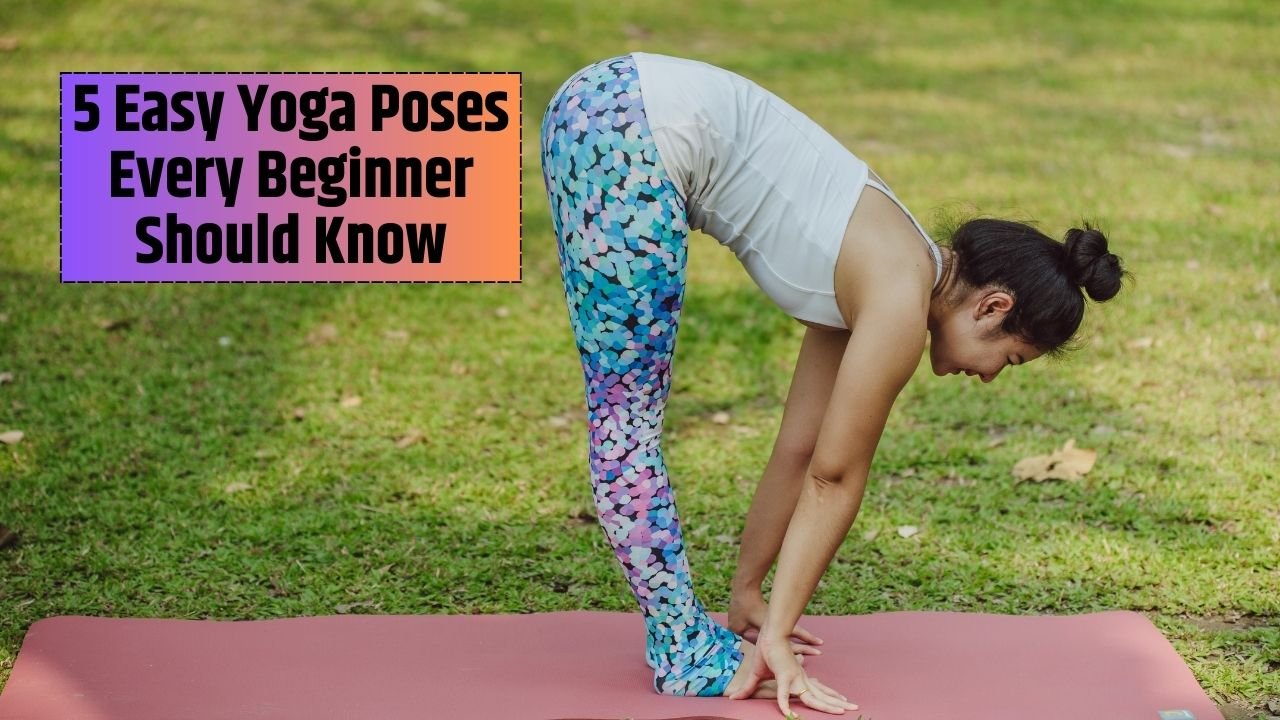

Starting yoga can feel a bit like walking into a foreign country you’ve heard good things, you know it could help, but the language is unfamiliar, the poses look complicated, and the fear of “doing it wrong” is real. Here’s the truth: you don’t need to be flexible, spiritual, or athletic to begin. You just need a mat (or even a towel), a quiet space, and a few minutes. That’s it.
These five beginner-friendly yoga poses are your gateway to a consistent, sustainable practice. No pressure. No headstands. Just simple movements that connect breath and body, helping you feel better, move better, and even think better. Let’s start at the ground level.
Mountain Pose (Tadasana)
Think of this as the “zero point” of yoga—where every other pose begins. It looks like just standing still, but it’s far more powerful than that. Mountain Pose teaches you how to feel your body: where your weight is, how your spine stacks, how your breath flows. That kind of awareness is the foundation of every yoga practice.
How to do it:
- Stand with feet hip-width apart, arms at your sides.
- Distribute weight evenly between both feet.
- Engage your thighs gently, lengthen your spine, and lift your chest slightly.
- Let arms hang naturally or bring palms together at your chest.
- Close your eyes if comfortable and breathe slowly.
Why it’s great for beginners:
It’s simple, grounding, and helps develop posture awareness—without strain or complexity.
Cat-Cow Pose (Marjaryasana–Bitilasana)
This gentle flow between two poses is your spine’s best friend. Whether you’ve been hunched over a laptop or just woke up with a stiff back, Cat-Cow helps loosen things up while syncing movement with breath.
How to do it:
- Begin on all fours: wrists under shoulders, knees under hips.
- Inhale: arch your back (Cow), lifting your tailbone and gaze.
- Exhale: round your spine (Cat), tucking chin to chest.
- Move slowly, matching breath and movement. Repeat for 5–10 rounds.
Why it’s great for beginners:
It introduces breath awareness and warms up the spine safely.
Downward-Facing Dog (Adho Mukha Svanasana)
It’s one of yoga’s most iconic poses—and for good reason. Downward Dog stretches your entire backside while strengthening your arms, shoulders, and core. But for beginners, it’s totally okay to bend the knees, widen the stance, and make it work for your body.
How to do it:
- From all fours, tuck toes and lift hips toward the ceiling.
- Aim to create an inverted V-shape.
- Spread fingers wide, press hands into the mat.
- Bend knees slightly if your hamstrings are tight.
- Let your head relax between your arms. Hold for 30 seconds.
Why it’s great for beginners:
It offers a full-body stretch and helps improve posture and strength even if you don’t “look like the pictures.”
Child’s Pose (Balasana)
This is your yoga safety net. Anytime you feel overwhelmed, tired, or just need a breather, come here. Child’s Pose offers a sense of physical and emotional rest. It’s also a great passive stretch for the hips, thighs, and lower back.
How to do it:
- Kneel on the mat, big toes touching, knees wide apart.
- Sit back on your heels and fold your torso forward.
- Stretch your arms out in front or rest them by your sides.
- Let your forehead touch the mat and breathe deeply.
Why it’s great for beginners:
It teaches you to listen to your body and rest without judgment. Plus, it just feels good.
Seated Forward Bend (Paschimottanasana)
Flexibility isn’t a requirement it’s a result. This pose teaches that lesson beautifully. Seated Forward Bend gently stretches the back, hamstrings, and calves, but it’s more about calming the mind than touching your toes.
How to do it:
- Sit with legs extended straight in front.
- Inhale, reach arms up to lengthen the spine.
- Exhale, hinge at the hips and fold forward, keeping the back long.
- Rest hands on your shins, ankles, or feet.
- Don’t force it. Let gravity do the work.
Why it’s great for beginners:
It encourages patience and calm while improving flexibility over time. No pressure, just presence.
A Few Tips Before You Begin
- You don’t need fancy clothes. Just wear something comfy you can move in.
- Forget about “perfect form.” Yoga is about how it feels, not how it looks.
- Use a chair or wall. If you need support, take it. Props are tools, not cheats.
- Keep your breath steady. If your breath gets short or strained, ease up.
- Consistency beats intensity. 10 minutes a day will do more than 1 hour once a week.
Starting yoga doesn’t require touching your toes or chanting Sanskrit mantras. It just takes a little time, a little curiosity, and the willingness to start where you are. These five beginner poses—Mountain, Cat-Cow, Downward Dog, Child’s Pose, and Seated Forward Bend—offer the perfect entry point to explore movement, breath, and body awareness in a safe and supportive way.
Over time, your balance improves. Your breath deepens. Your body loosens. But most importantly, your connection to yourself gets stronger. That’s the real gift of yoga not the poses, but the process.
FAQs
3–4 times a week is a great start. Even short daily sessions help build a solid habit.
Nope. Flexibility is something yoga helps develop it’s not a prerequisite.
Hold for 20–40 seconds. If it feels good and your breath is steady, feel free to stay longer.
Absolutely. No studio required. Just a quiet corner, a mat (or towel), and your breath.
There’s no such thing. Use modifications, props, or just rest when you need to. Progress comes with practice.
